Broccoli Labs
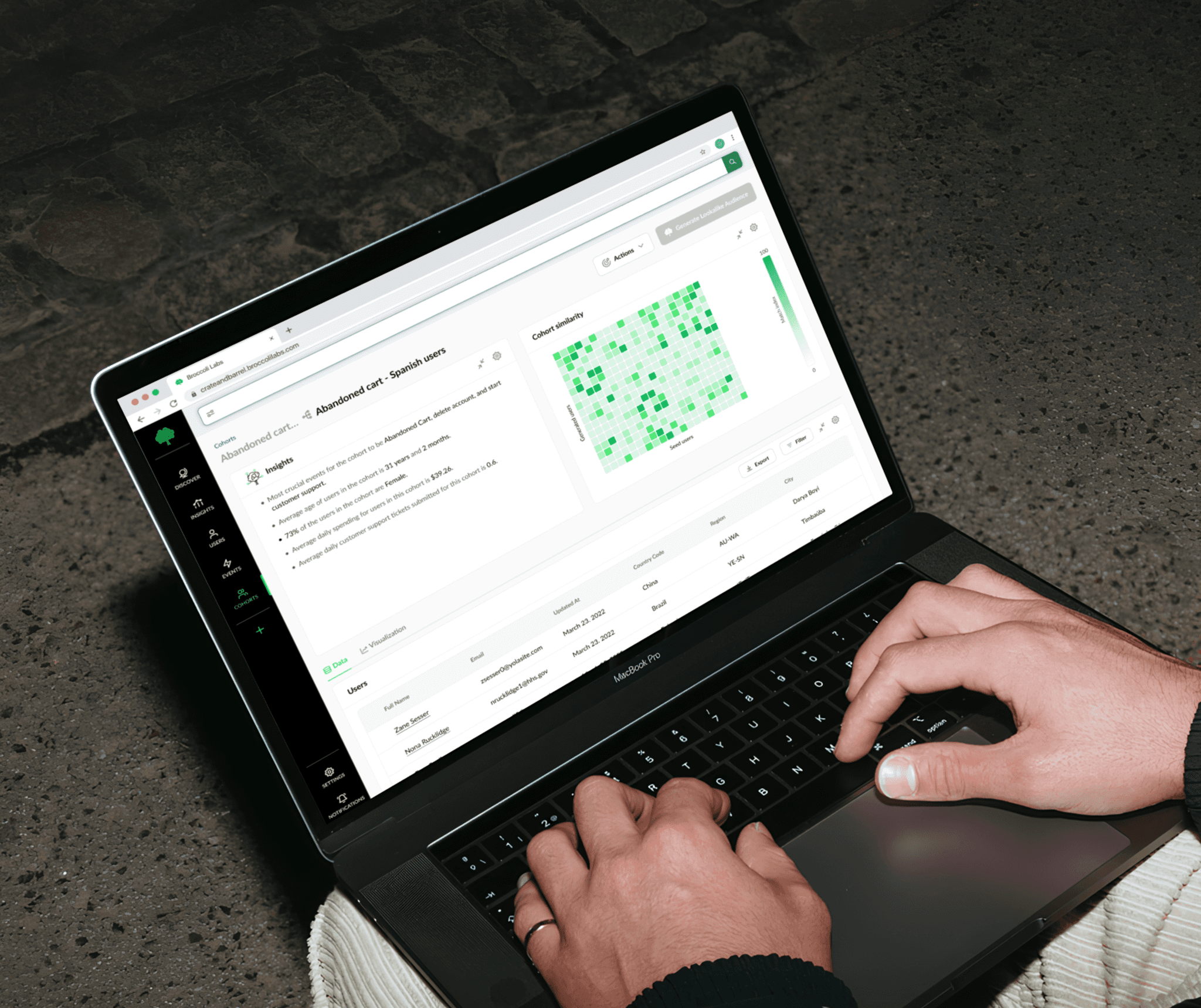
A self-serve analytics and activation platform that helps growth teams quickly discover user issues, identify root causes, and take action—all without requiring technical expertise. By combining semantic search with AI-driven audience expansion, it enables teams to reduce churn and drive targeted growth campaigns.
Type:
Design Sprint & Agile
Role:
UX/UI Designer
Year:
2022
Understanding the Problem Space
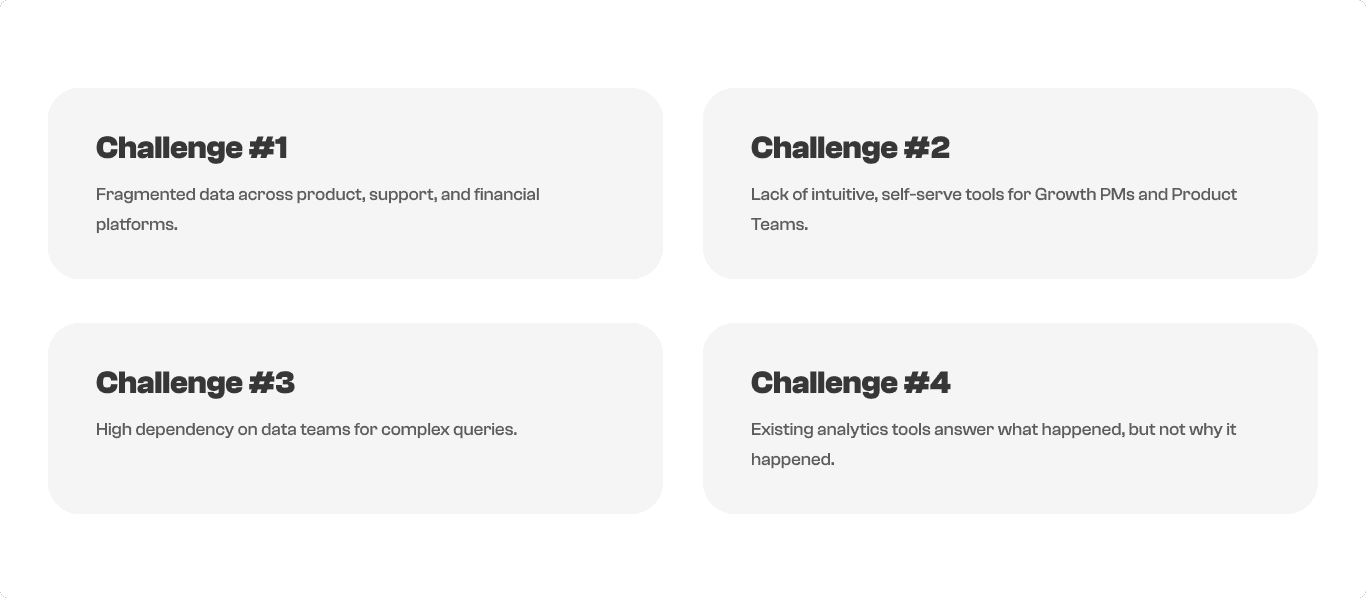
With user behavior becoming increasingly fragmented across touchpoints like product usage, customer support, and external platforms (e.g., Stripe, Zendesk), product teams struggle to build a unified understanding of their users. Traditional tools like Mixpanel and Amplitude provide in-product analytics but fall short in answering critical “why” questions and enabling fast, data-driven actions.
Additionally, modern data stacks have outpaced legacy analytics platforms. While companies store vast amounts of user data in warehouses like Snowflake and BigQuery, deriving actionable insights remains complex and technical.
My Role & Contributions
As the Product Designer, I worked hands-on across the entire design sprint:
Created user personas and journey maps.
Led the design system creation and established UI patterns.
Advocated for critical product concepts like the Insights Dashboard, Expand Similar Audience feature, Semantic Search with Autosuggestions, and Product Activity feeds.
Designed and prototyped high-fidelity UI screens, contributing directly to user testing and validation.
Research Approach & Key Insights
4 Expert Interviews with startup PMs and key business stakeholders.
Used Affinity Mapping and Jobs-To-Be-Done to synthesize findings.
Conducted user journey breakdowns focusing on the Growth PM’s workflow.
Key User Insight:
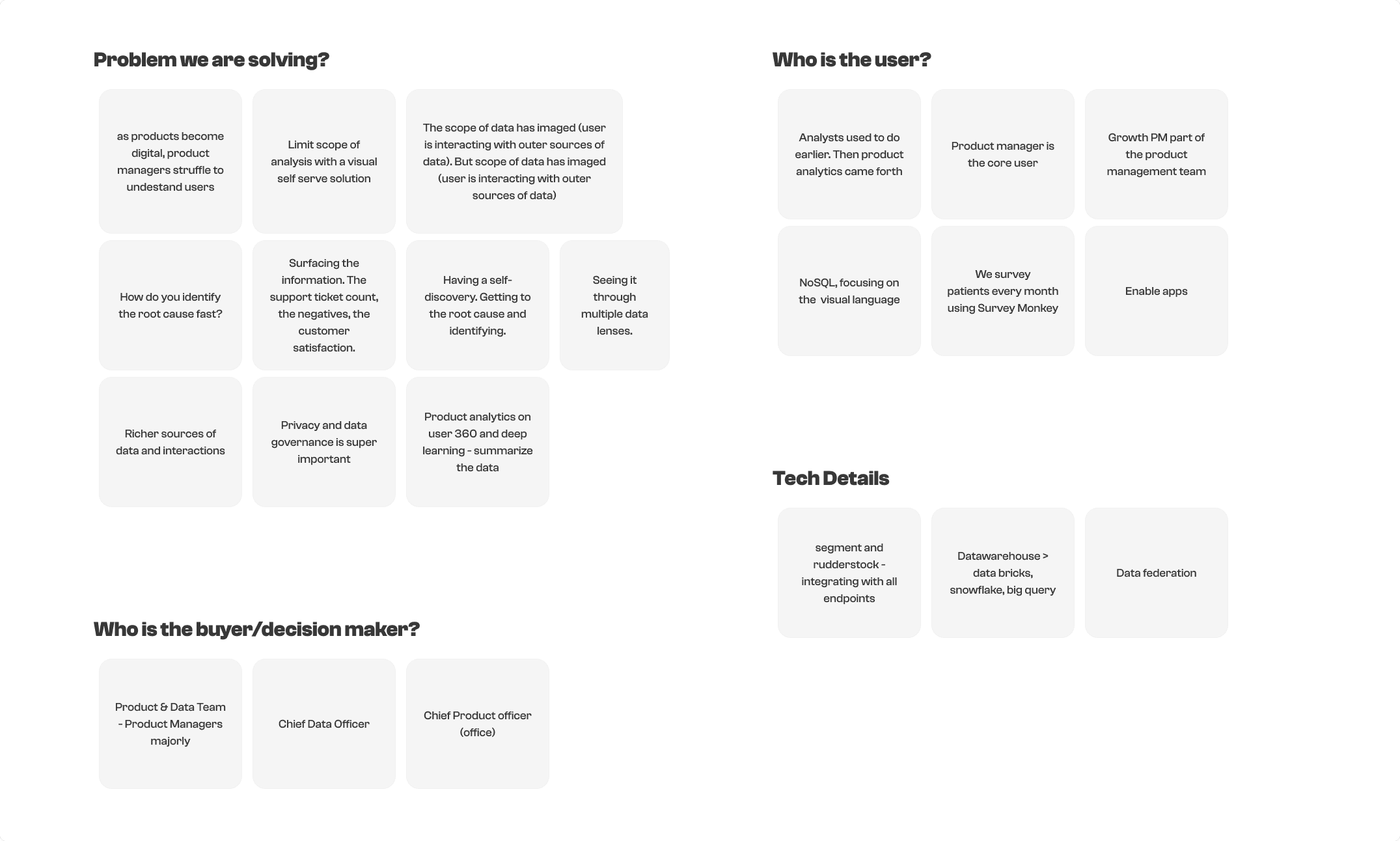
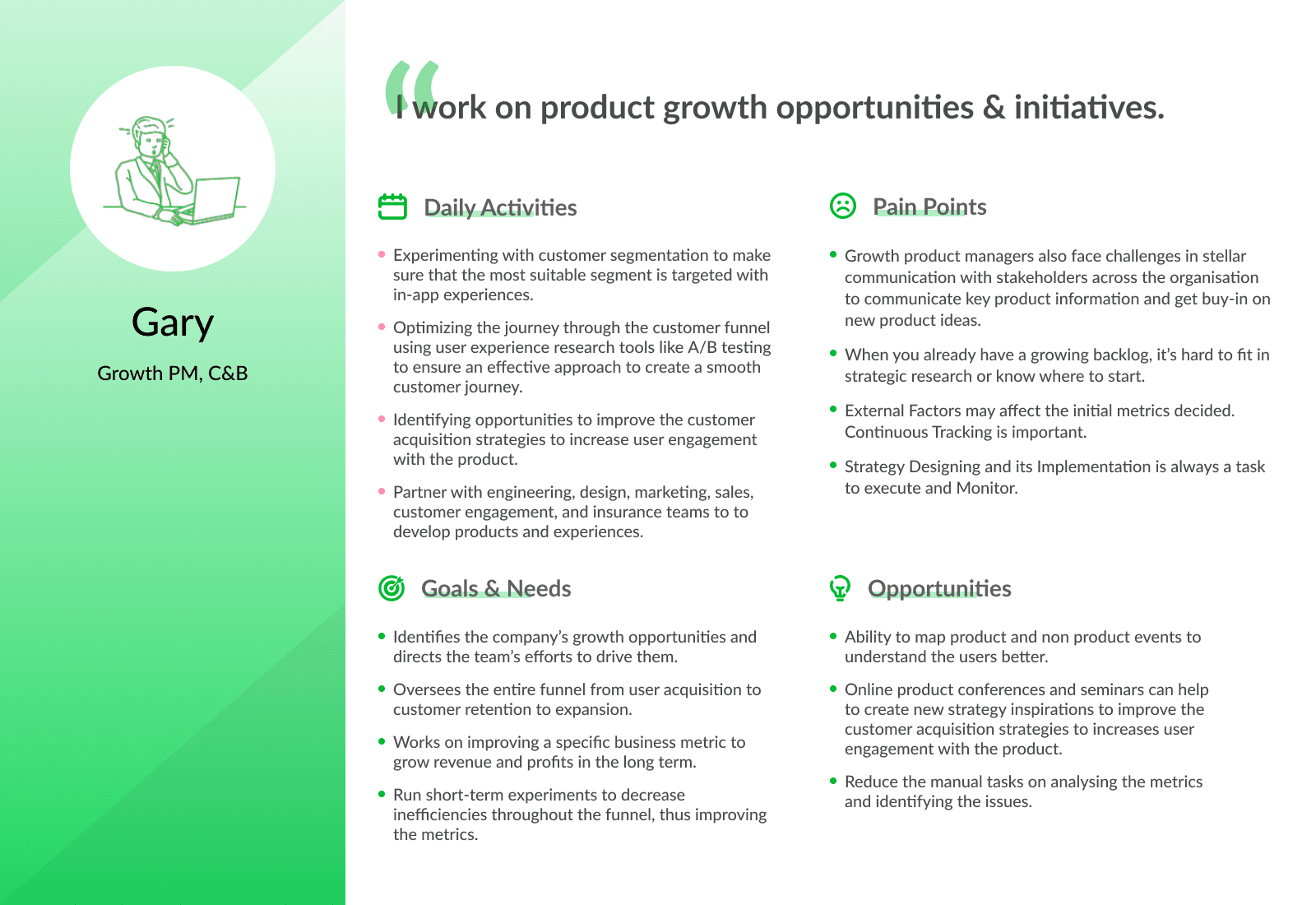
Gary, a Growth PM, doesn’t have the time or technical ability to query data manually. He needs fast, actionable insights to reduce churn and improve engagement, without depending on data teams.
User Personas & Behavioral Insights
Goals: | Reduce churn, grow revenue, drive experiments. |
|---|---|
Pain Points: | Fragmented data, poor tooling for discovery, dependency on data teams. |
Opportunities: | Self-serve insights, audience expansion, actionable insights. |
Design Challenges & Trade-offs
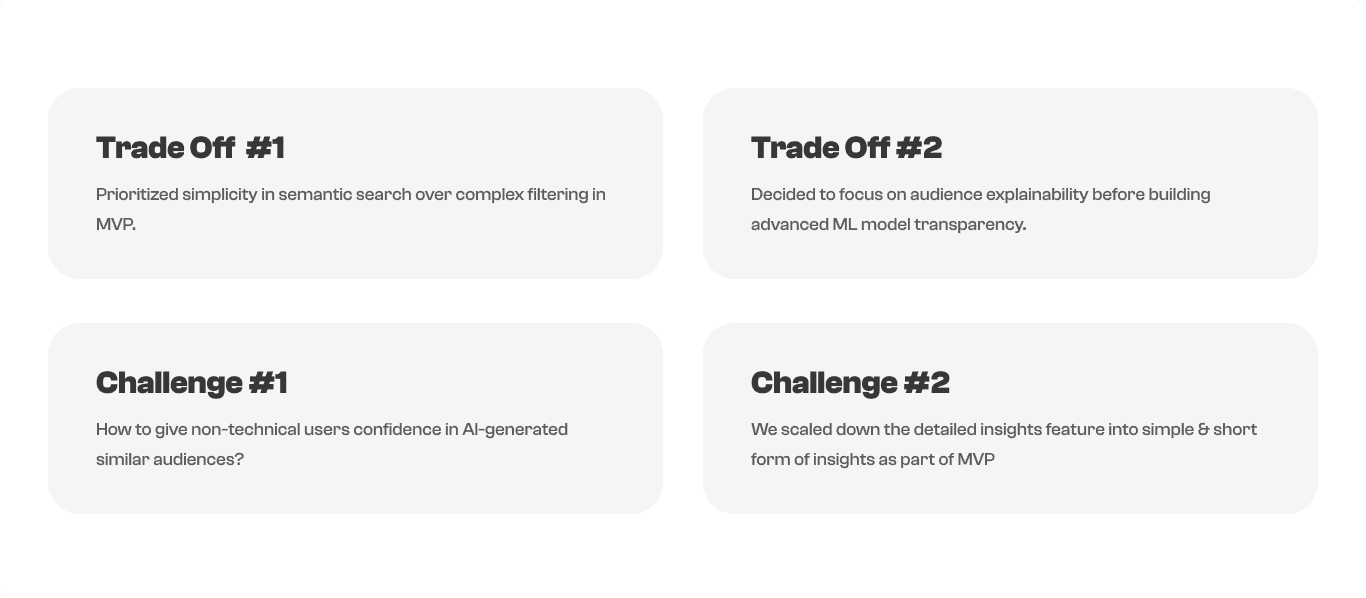
Multiple decisions have been made and below are top 3 decisions which impacts the overall MVP
Key User Journey & Experience Map
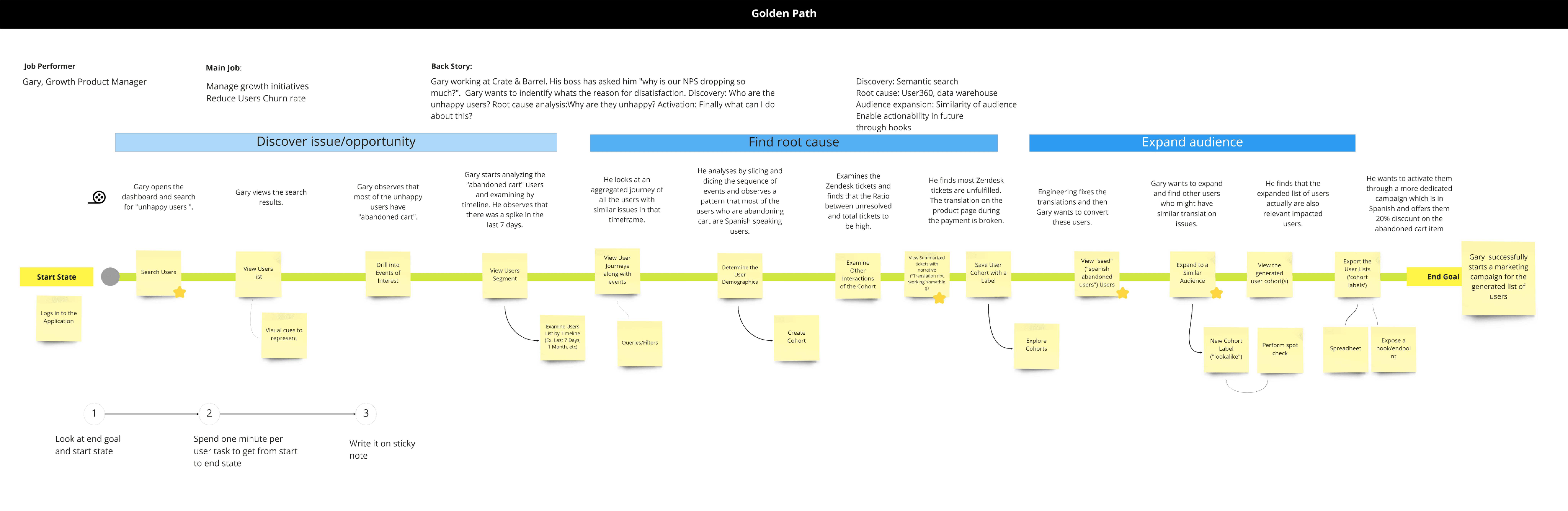
From ambiguity to prototype, we mapped the ideal Golden Path. The whole Journey is divided into 3 areas of interaction.
Solution Design & Prototypes
Core Features Designed:
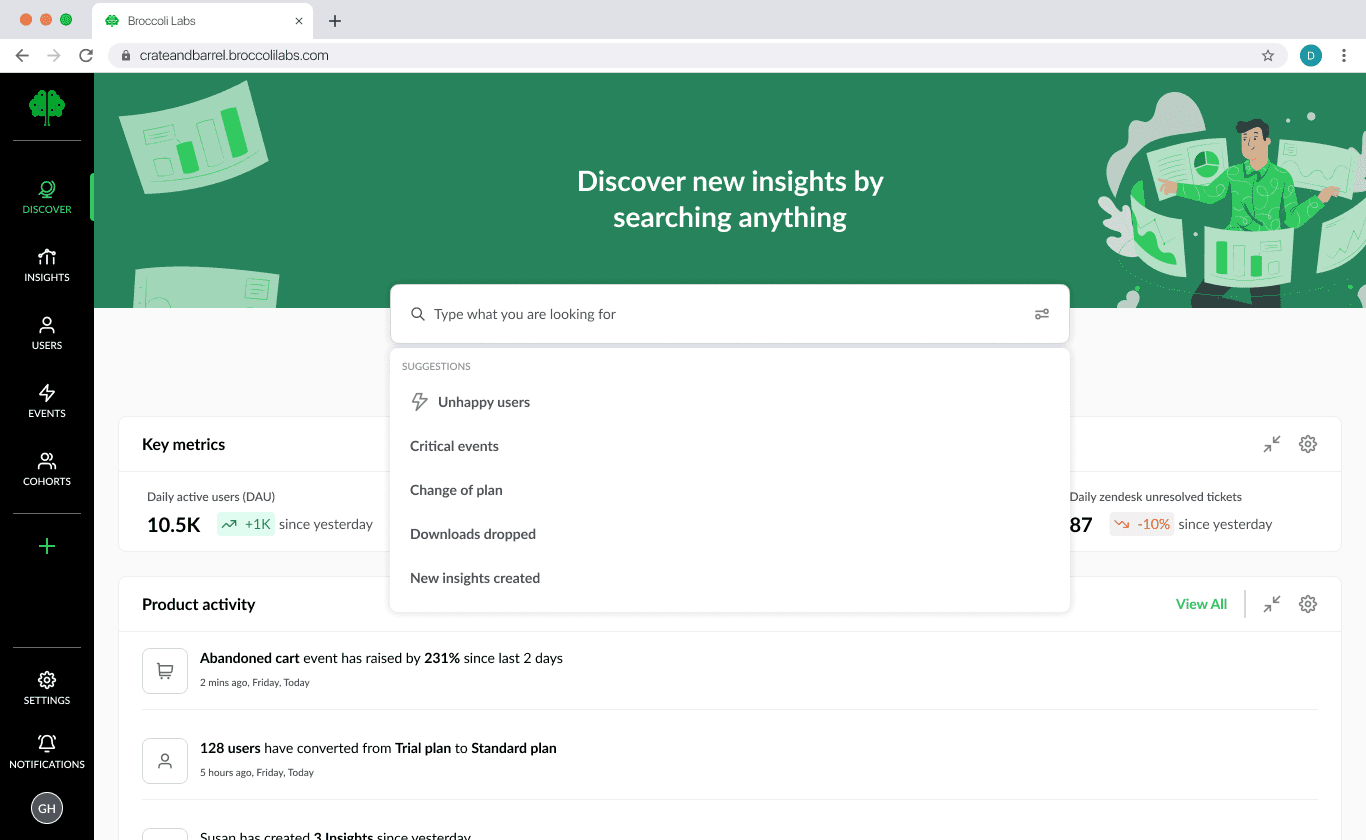
Semantic Search with Auto-suggestions: Simplifies exploration for non-technical users.
Insights Dashboard: Highlights critical product activities and key growth metrics at a glance.
User Journey & Funnel Visualization: Intuitive data visualizations highlighting problem areas.
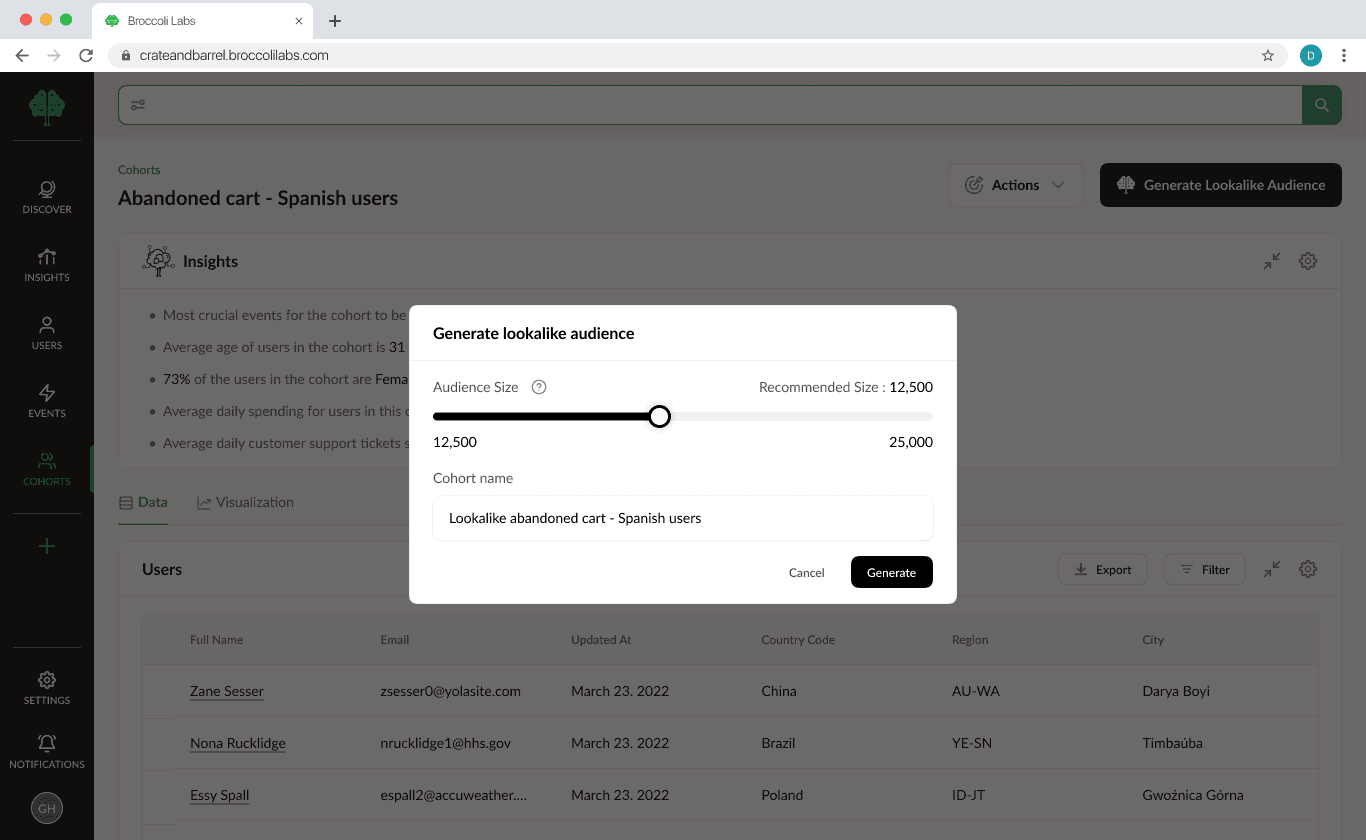
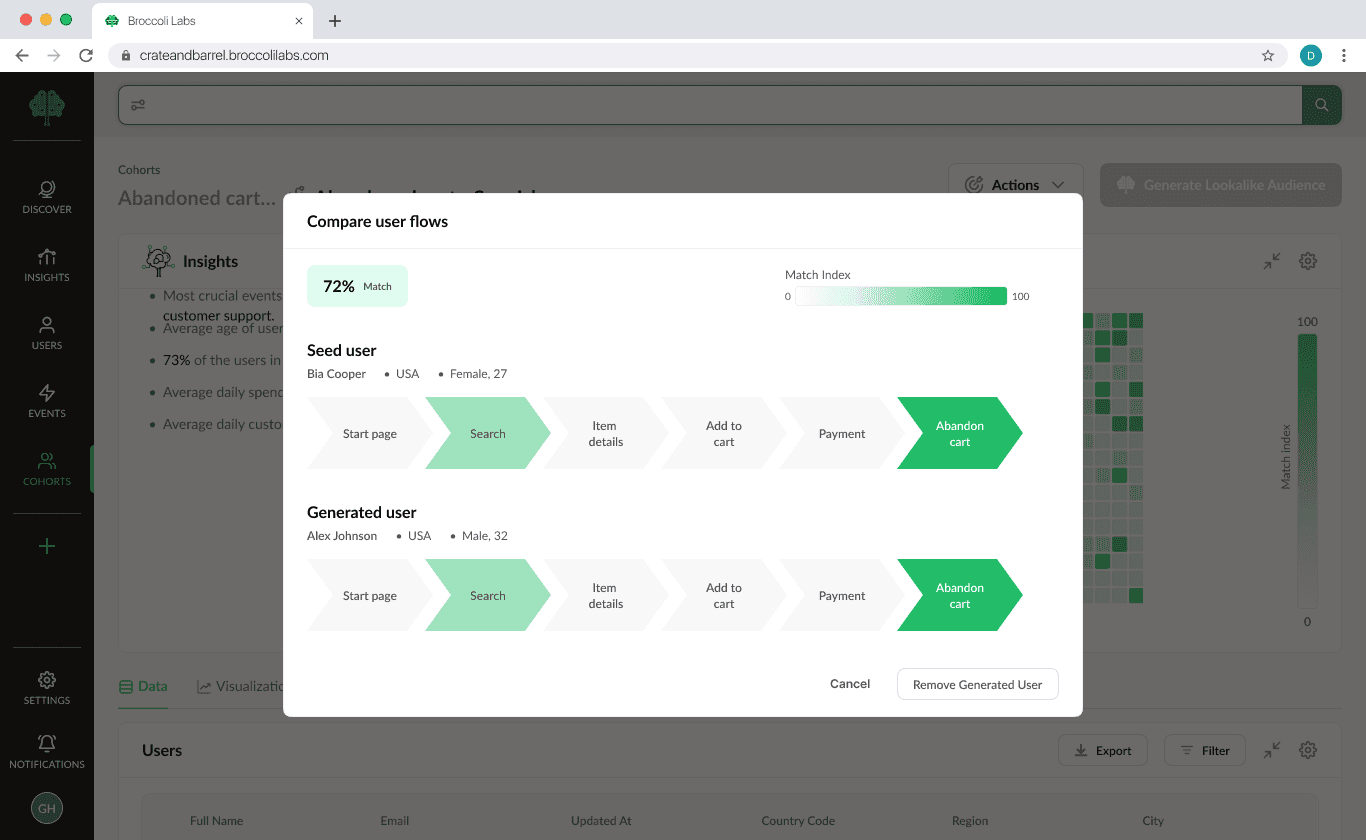
Similar Audience Expansion: AI-powered audience modeling with confidence scoring and spot checks.
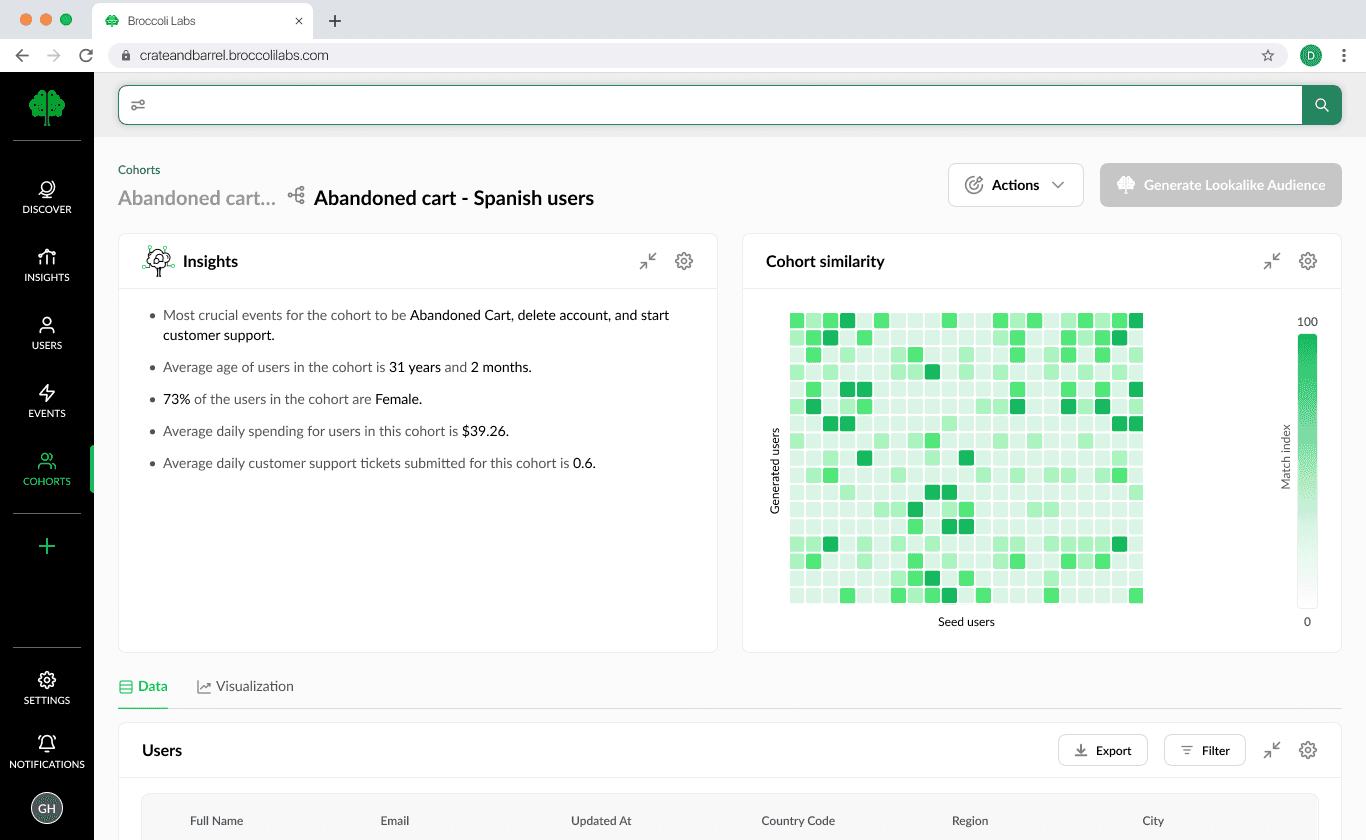
Cohort Explainability: Helps users understand why certain users were included in a cohort.
Semantic Searching: User can use natural language to search instead of complex query
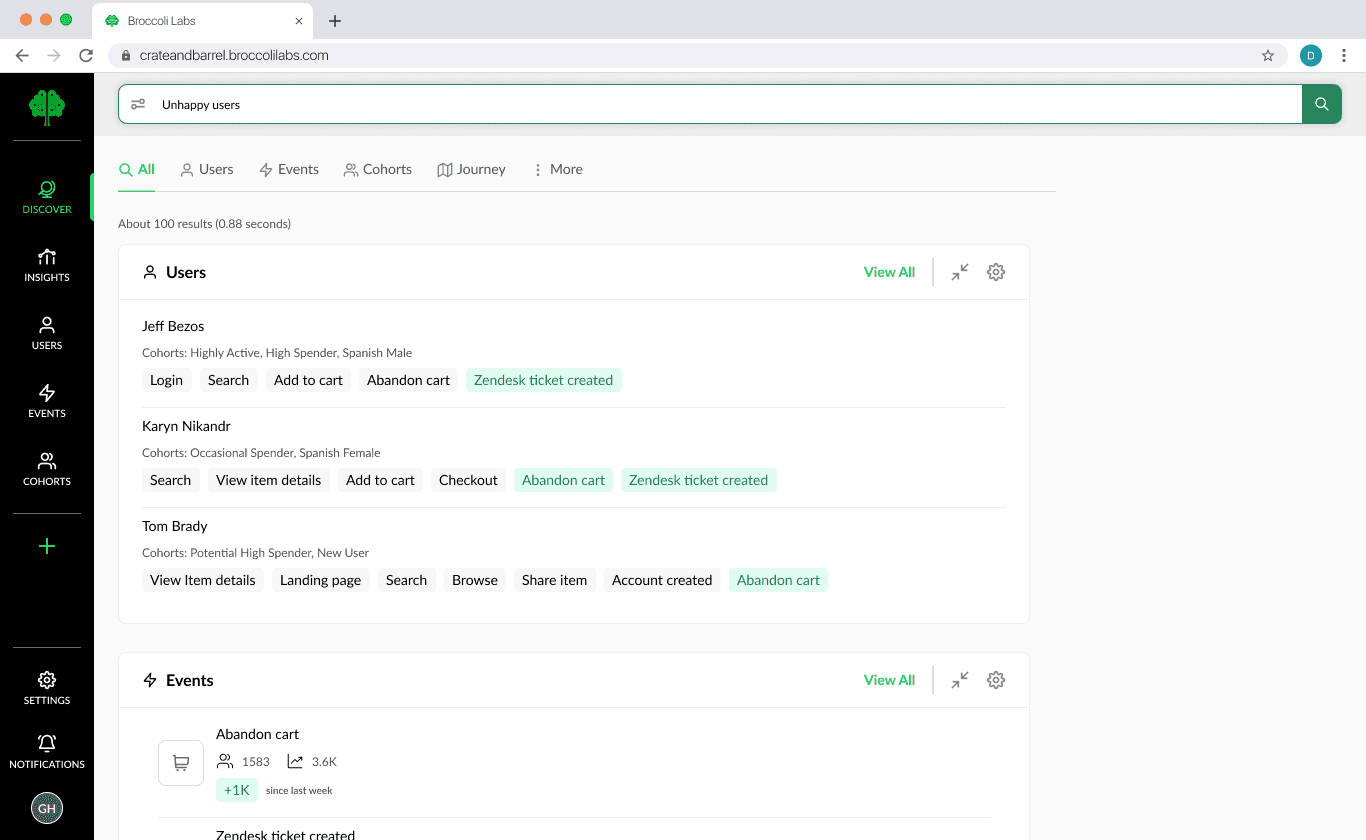
Discover Data Insights
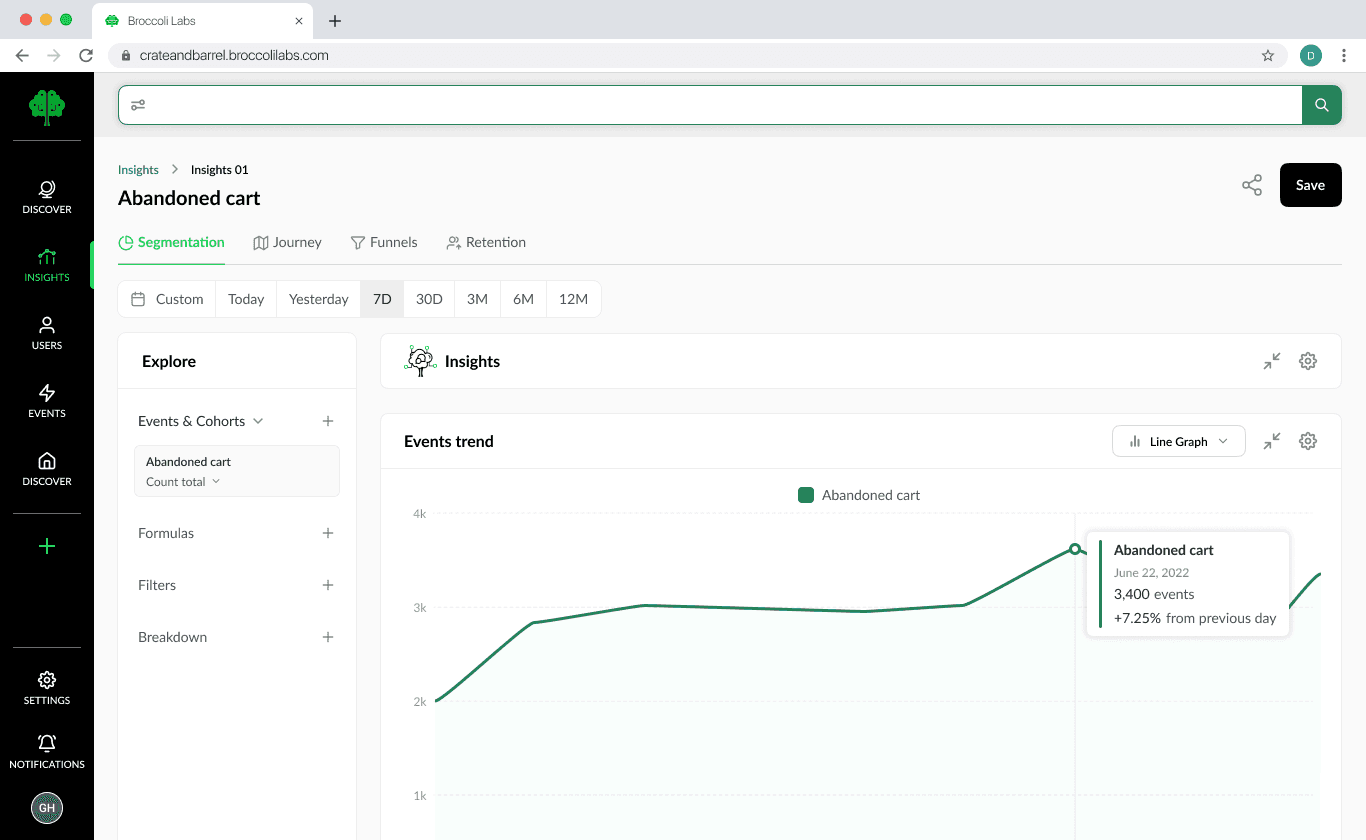
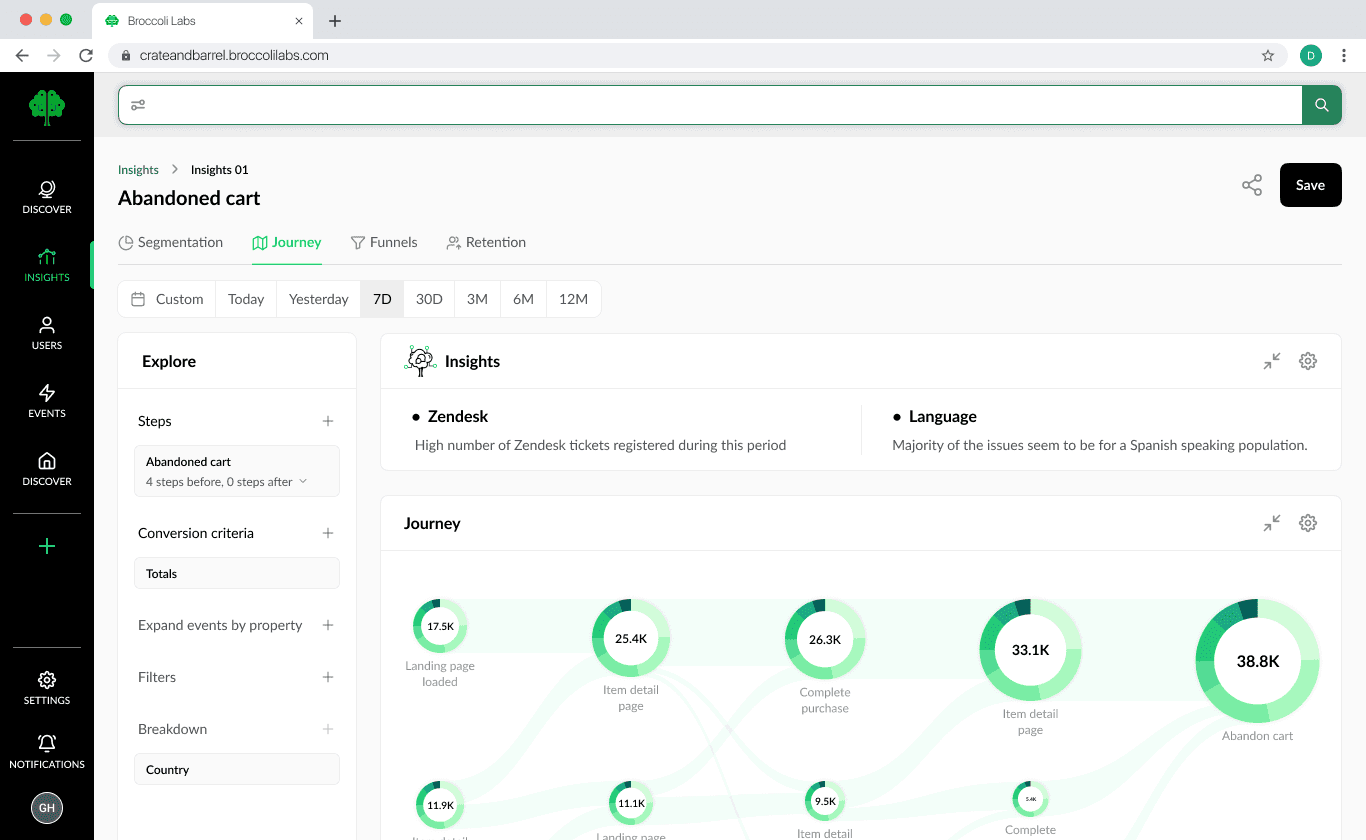
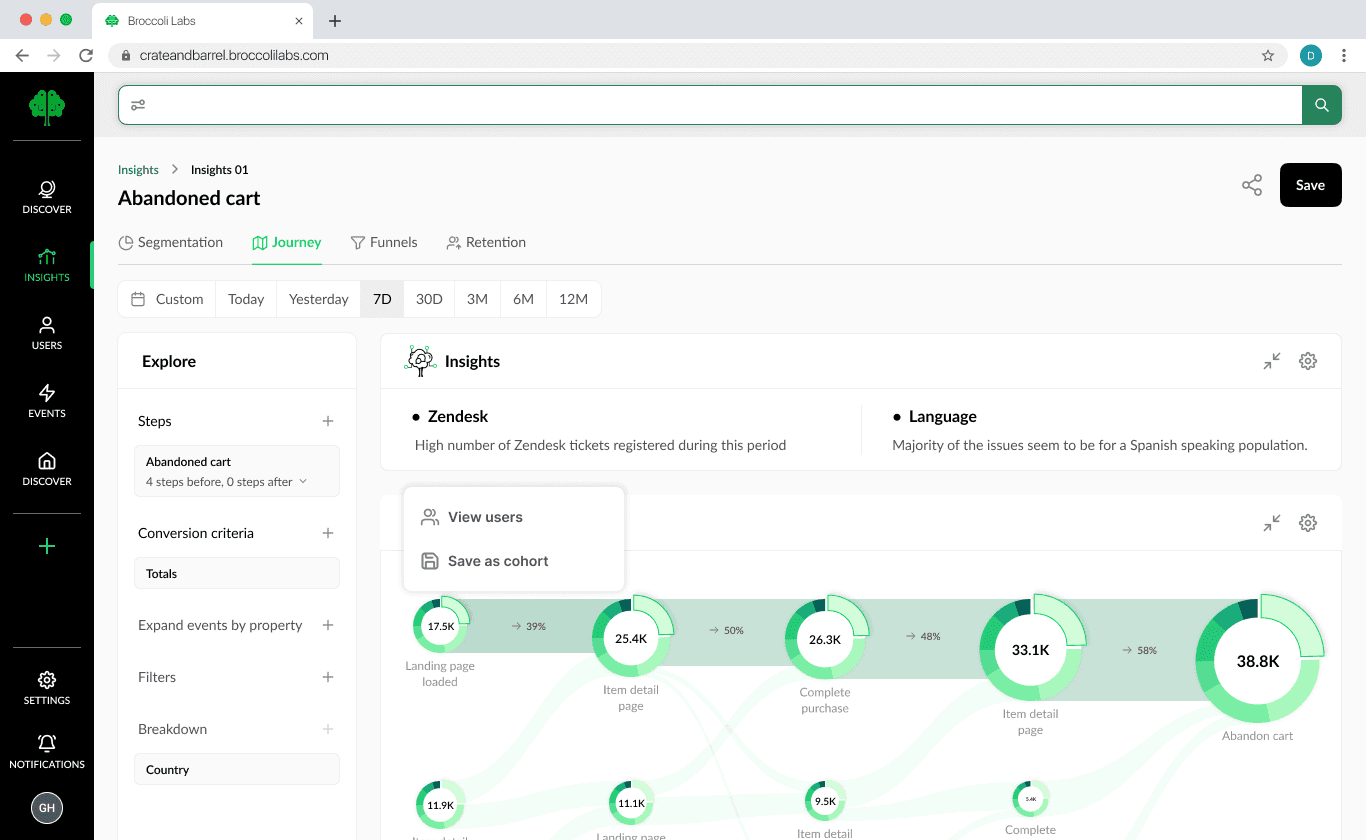
Cohorts
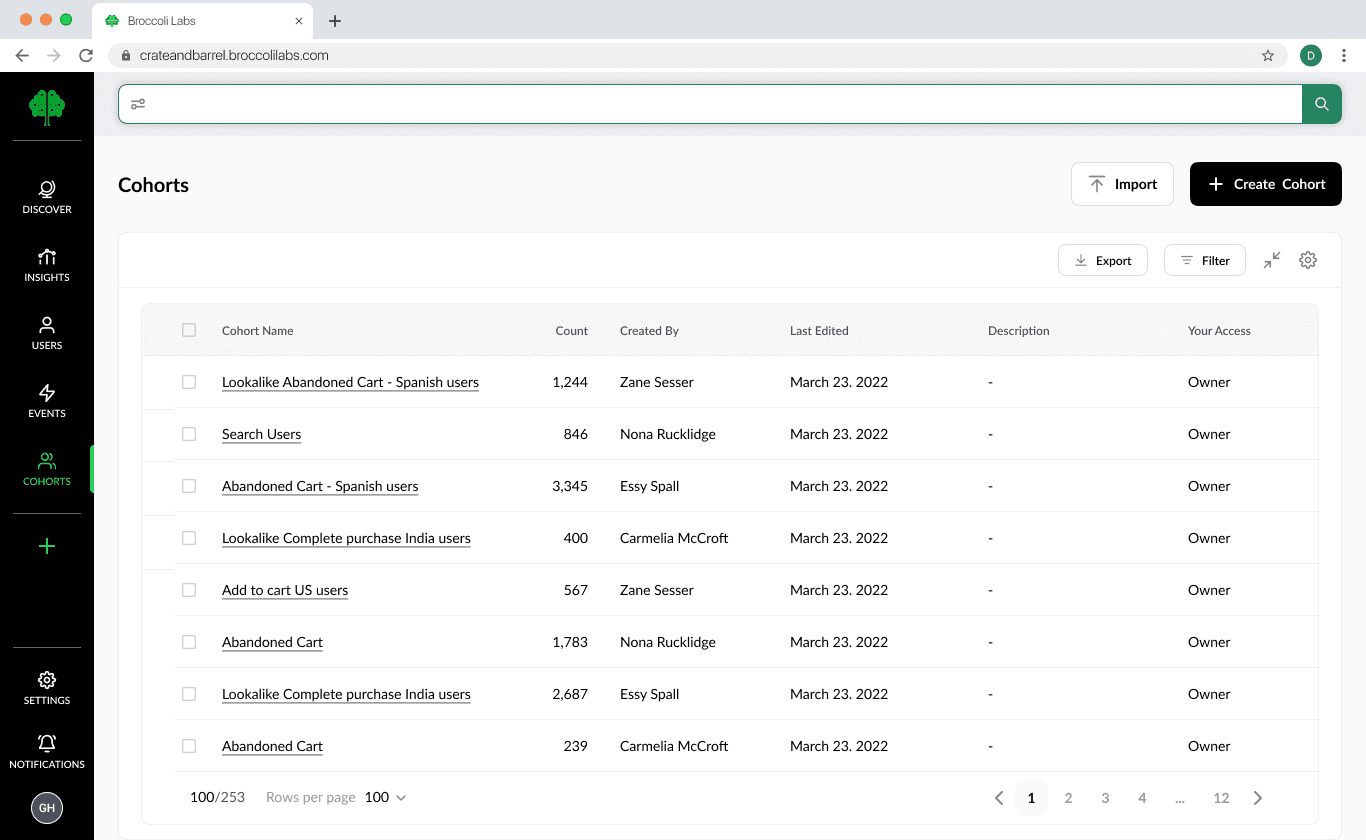
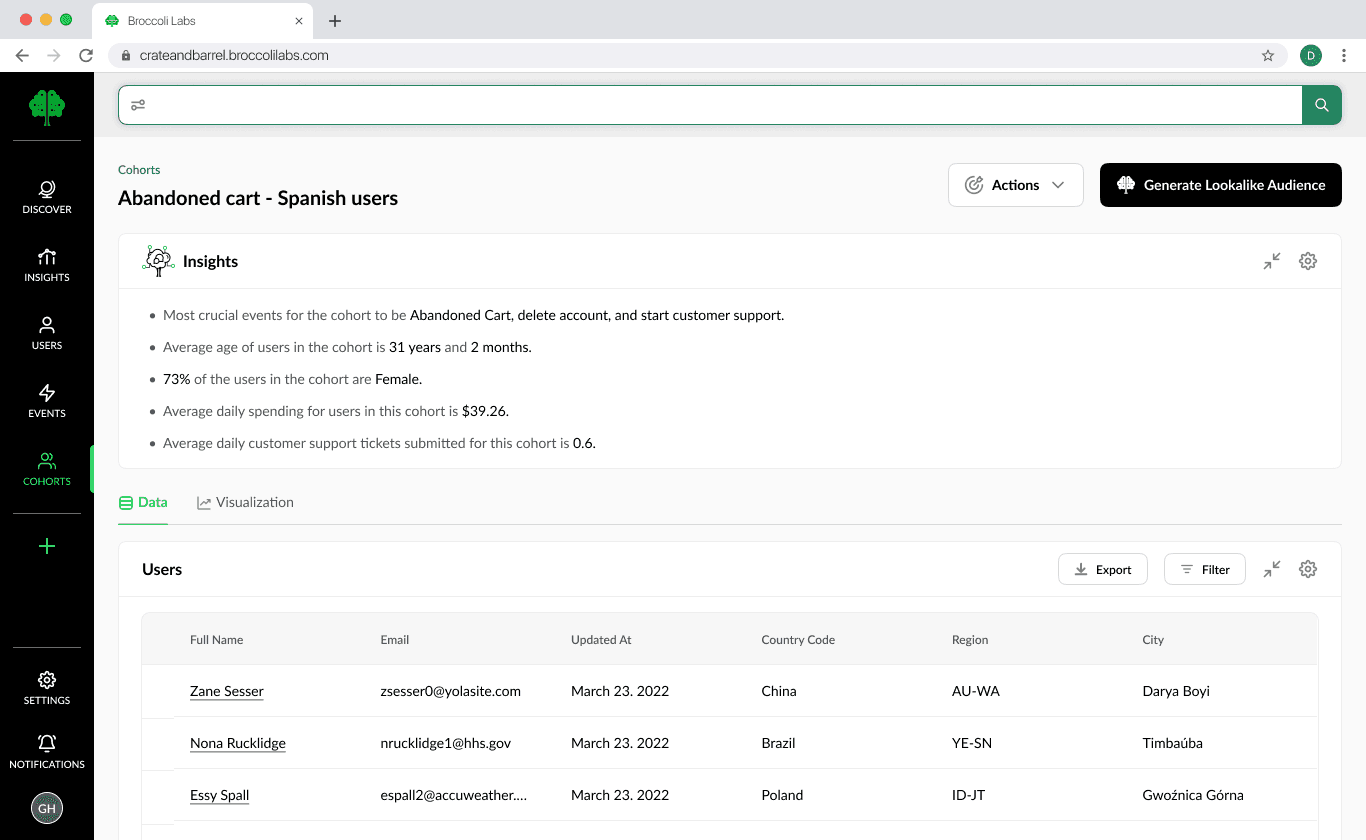
Audience Expanding & Cohort Explainability
Cohort Explainability
Visual Design Approach
Clean, data-first interface with a focus on usability.
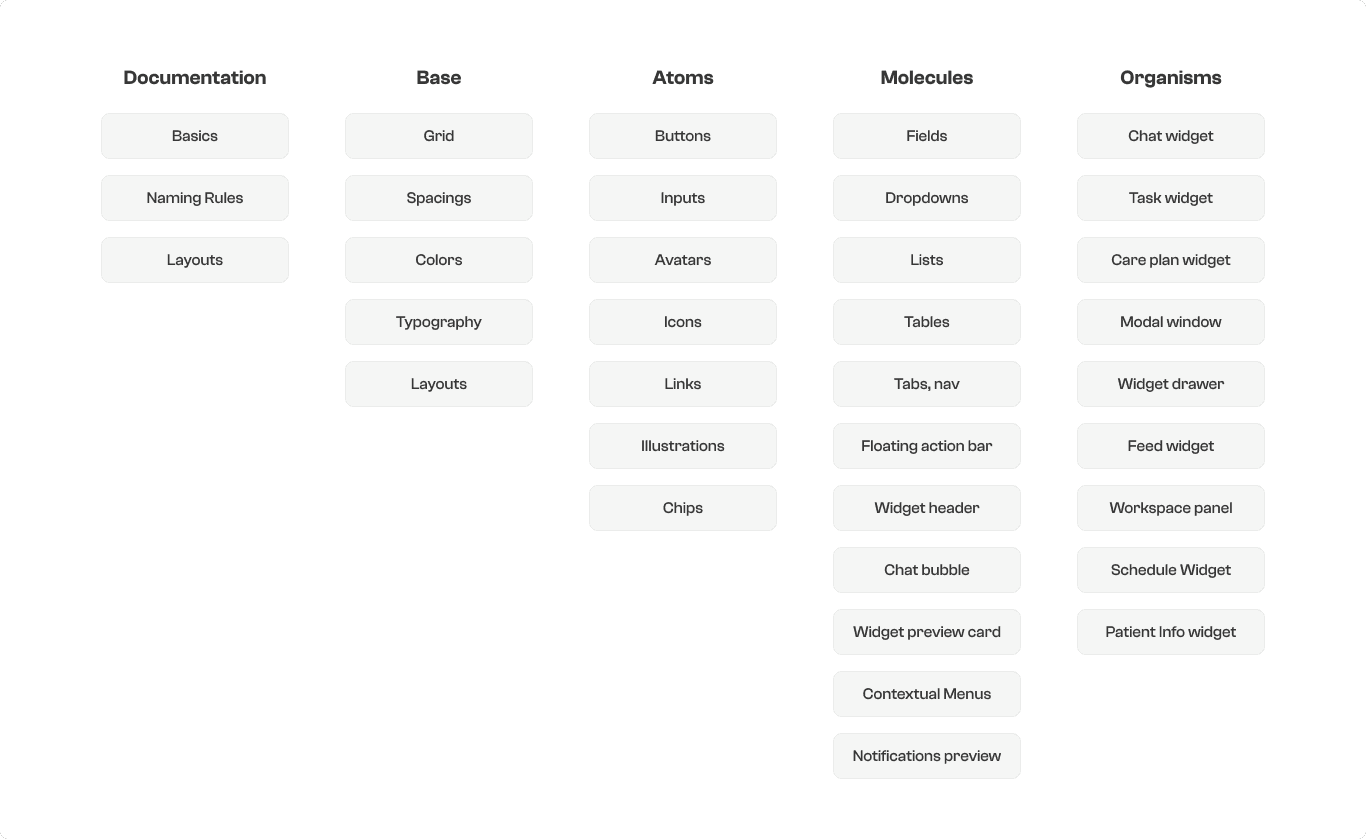
Design system based on Atomic Design principles, ensuring scalability.
Prioritized dashboard legibility and visual hierarchy for quick decision-making.
Reflection & Learnings
While the sprint successfully delivered a complete design MVP within 7 days, I realized the importance of balancing AI automation with user trust. In future iterations, I’d explore deeper cohort explainability through interactive model breakdowns and richer validation interfaces.
Final Note & Next Steps
From ambiguity to a high-fidelity prototype in just 7 days, this sprint showcased the power of design leadership and product thinking. It delivered a validated solution addressing a critical gap in modern product growth strategies.
As next steps we will be priortizing the below things:
Prototype advanced AI Explainability dashboards.
Validate the lookalike audience feature across more verticals (Healthtech, Fintech).
Collaborate closely with engineering for optimized semantic search performance at scale.
Design System
We used the “People, parts & systems and Atomic design Methodology” approach to come up with a design system within a day based on the components present in the sketches