Apna Mart
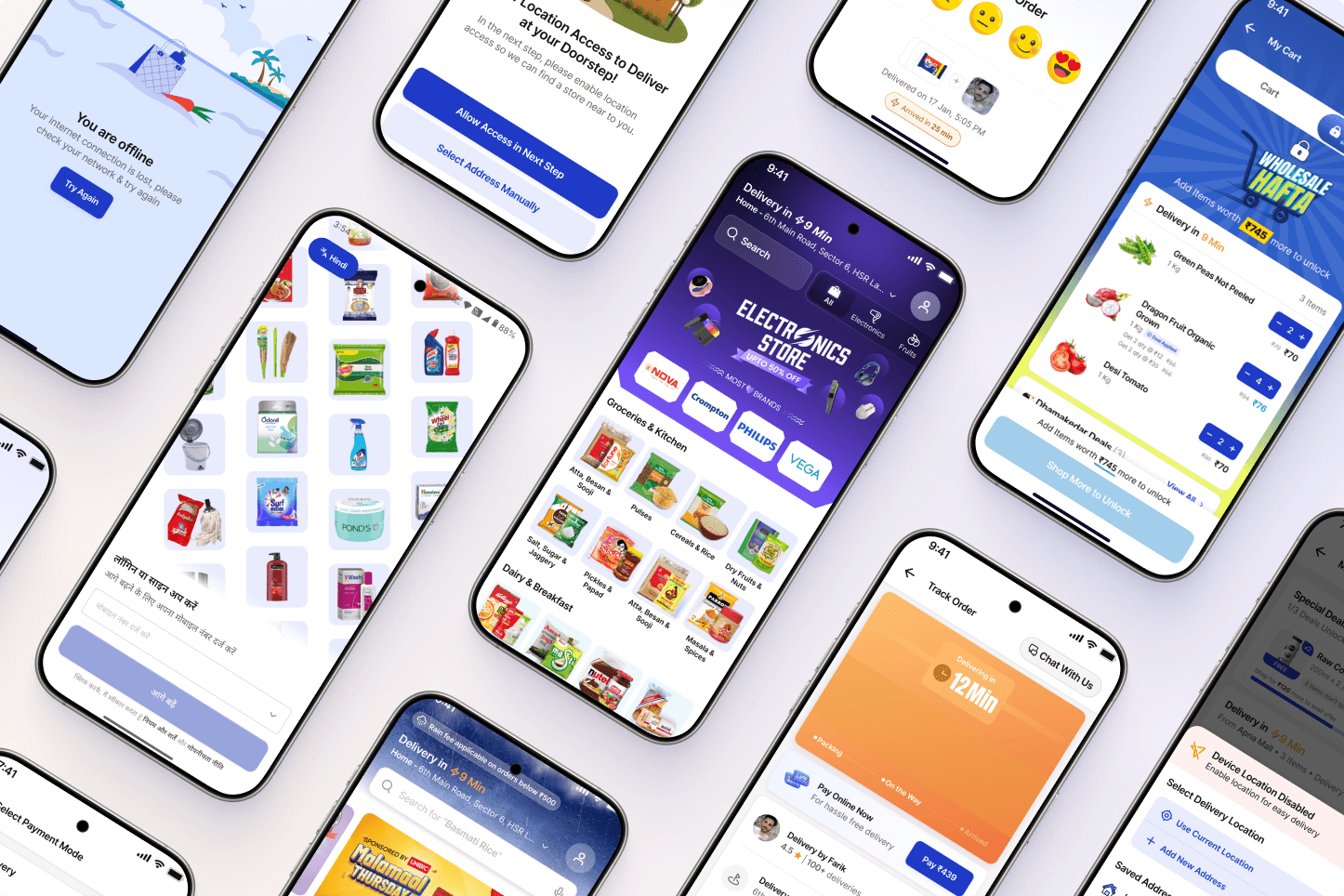
A Quick-Commerce company with more than 150 stores serving both offline & online in Jharkhand, Chhattisgarh & West Bengal serving primarily for Tier 2-3 city users, where I designed at scale across Apna Mart's ecosystem.
Type:
Fast Pace & Agile
Role:
Sr Product Designer
Year:
Jan 2023 - Oct 2025
The Ecosystem Challenge
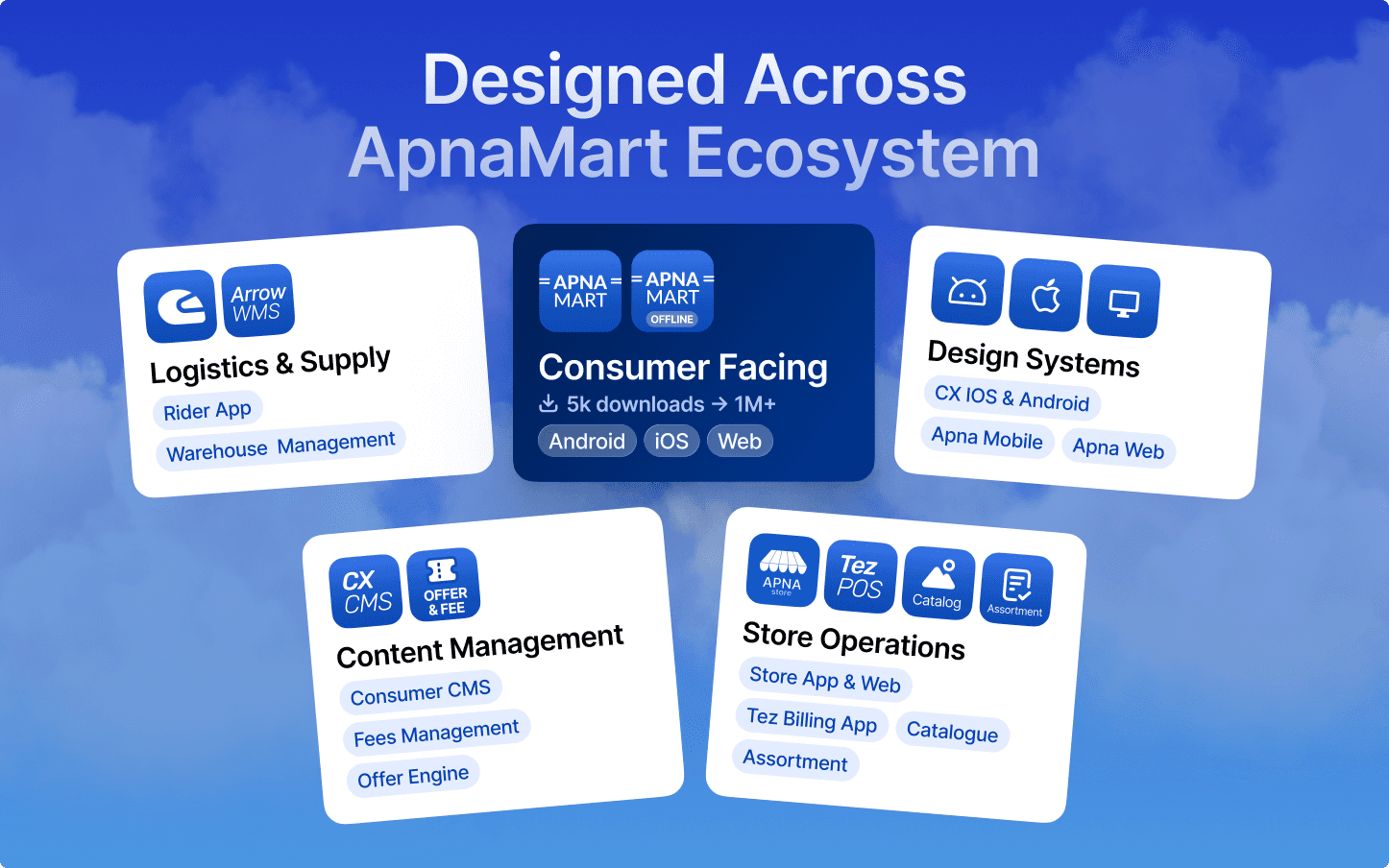
Over 2.5 years at Apna Mart, I designed across an interconnected digital retail ecosystem spanning multiple user types and complex workflows across Web, Android and iOS platforms.
Working in this rapidly scaling environment meant designing solutions that addressed immediate user needs while supporting overall business efficiency, scalability, and strategic growth. Every decision had to consider complex interdependencies, technical constraints, and extensive cross-team collaboration.
This case study focuses on my major contribution: designing core Consumer App experiences to build trust, reduce cancellations, and foster retention in a market serving primarily Tier 2-3 city users.
🪶Quick Note:
While I have worked on more than 20 products, this case study highlights only a few selected.
i.e. Reducing order cancellations and promoting customer retention.
Impact Summary
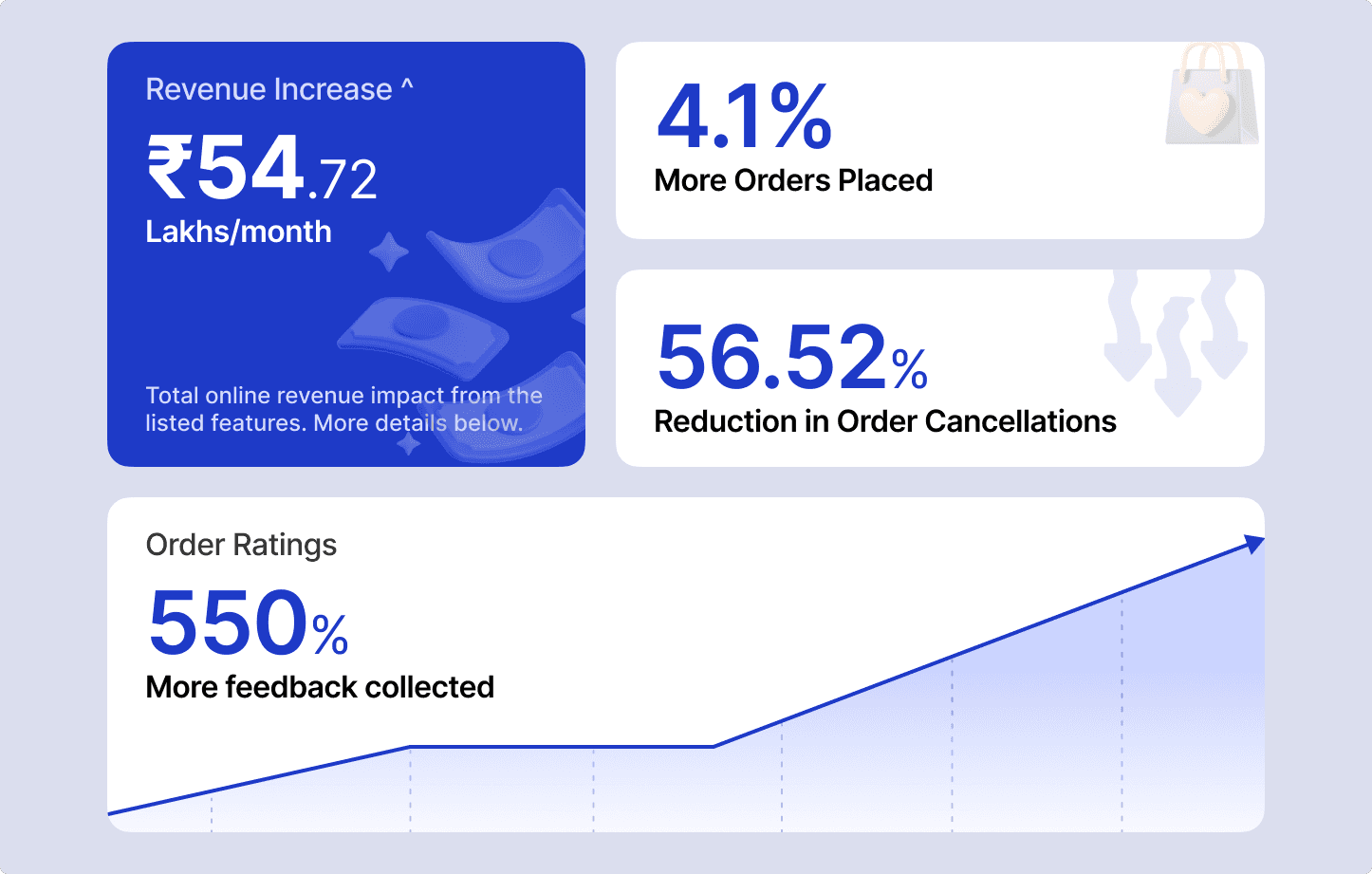
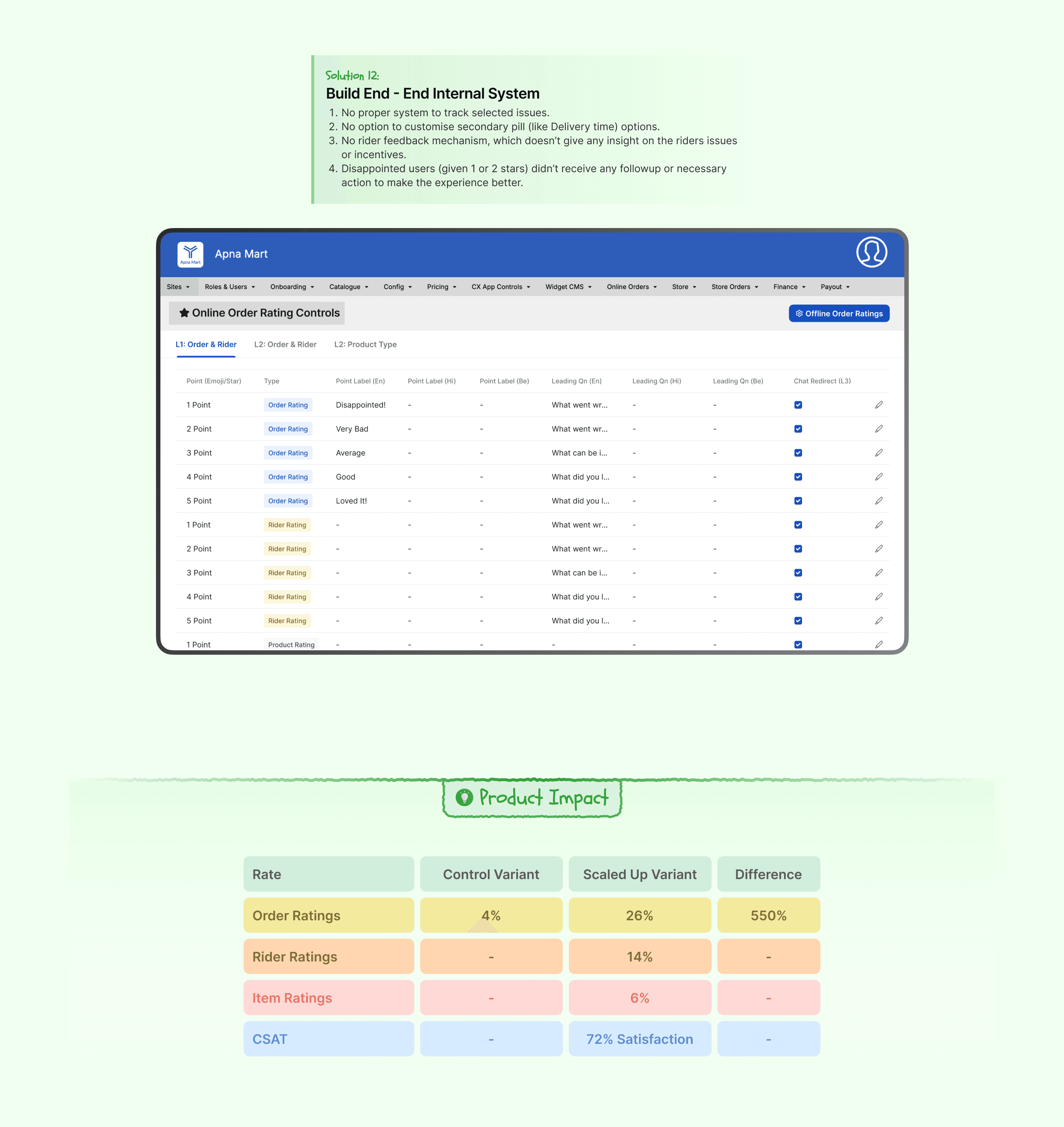
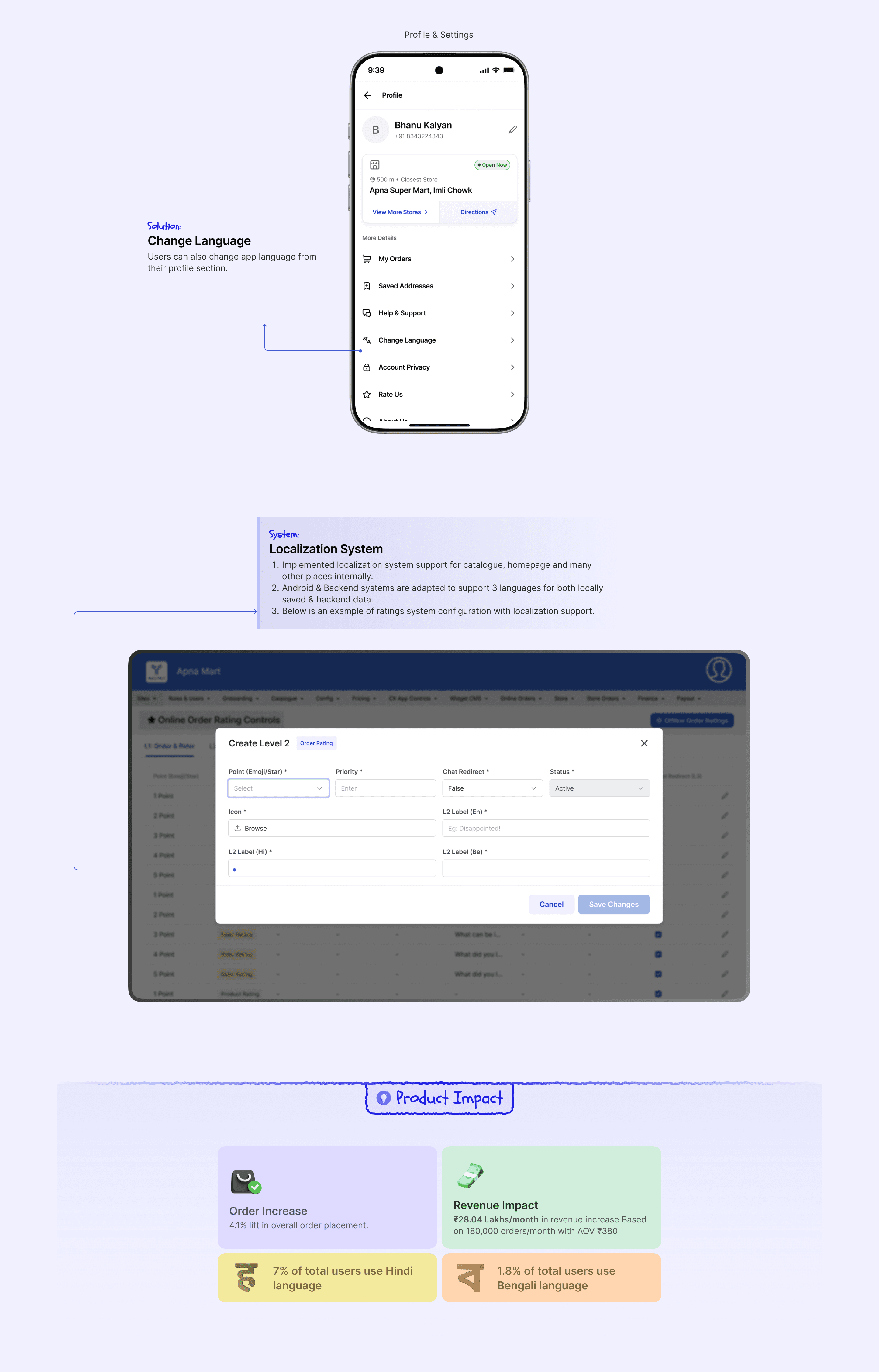
₹54.72 Lakhs/month in direct revenue impact through strategic UX improvements that reduced order cancellations by 56.52% and increased order placement by 4.1%, while boosting user feedback collection by 550%.
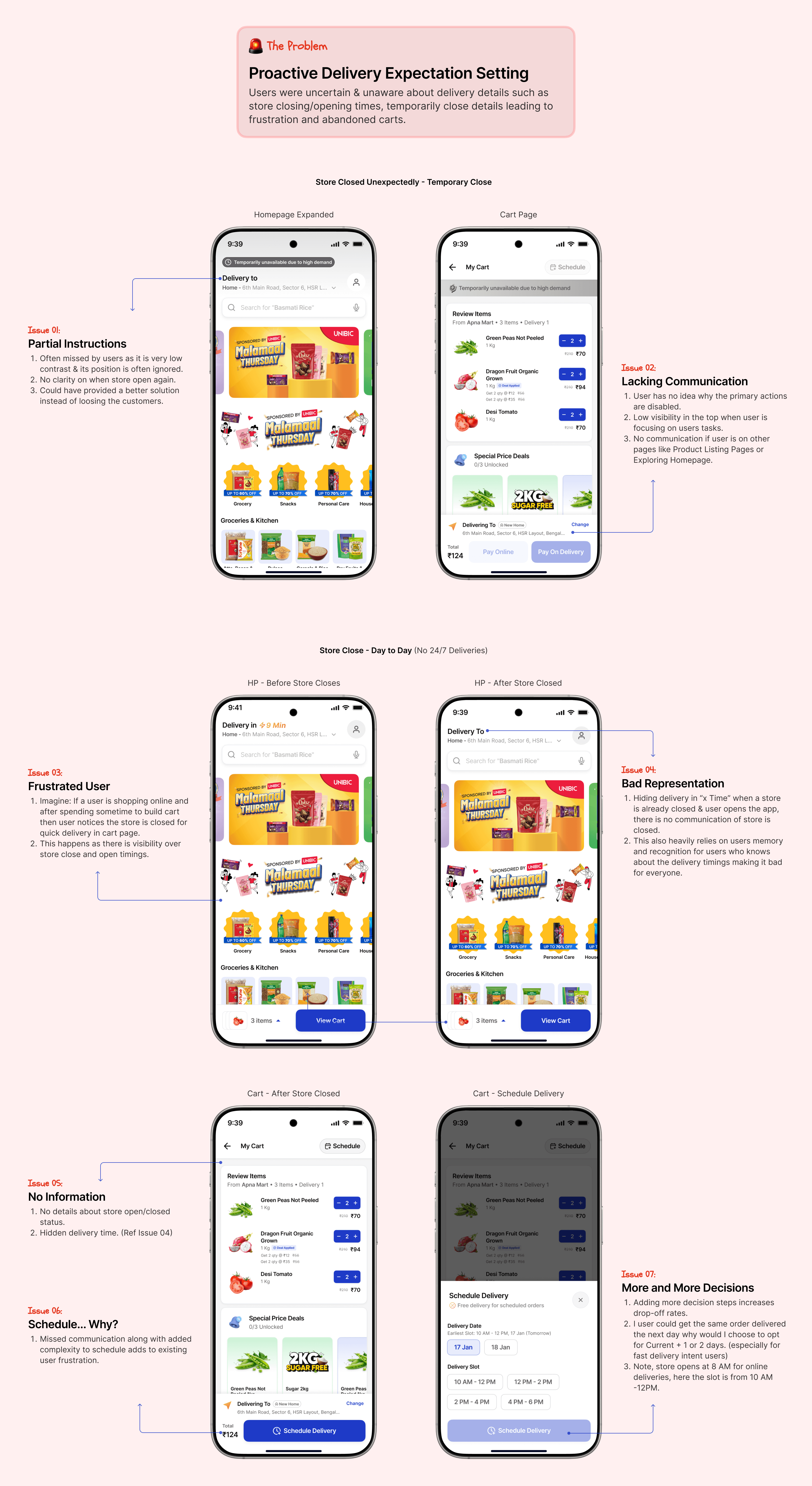
The Challenge: User Uncertainty Driving Business Loss
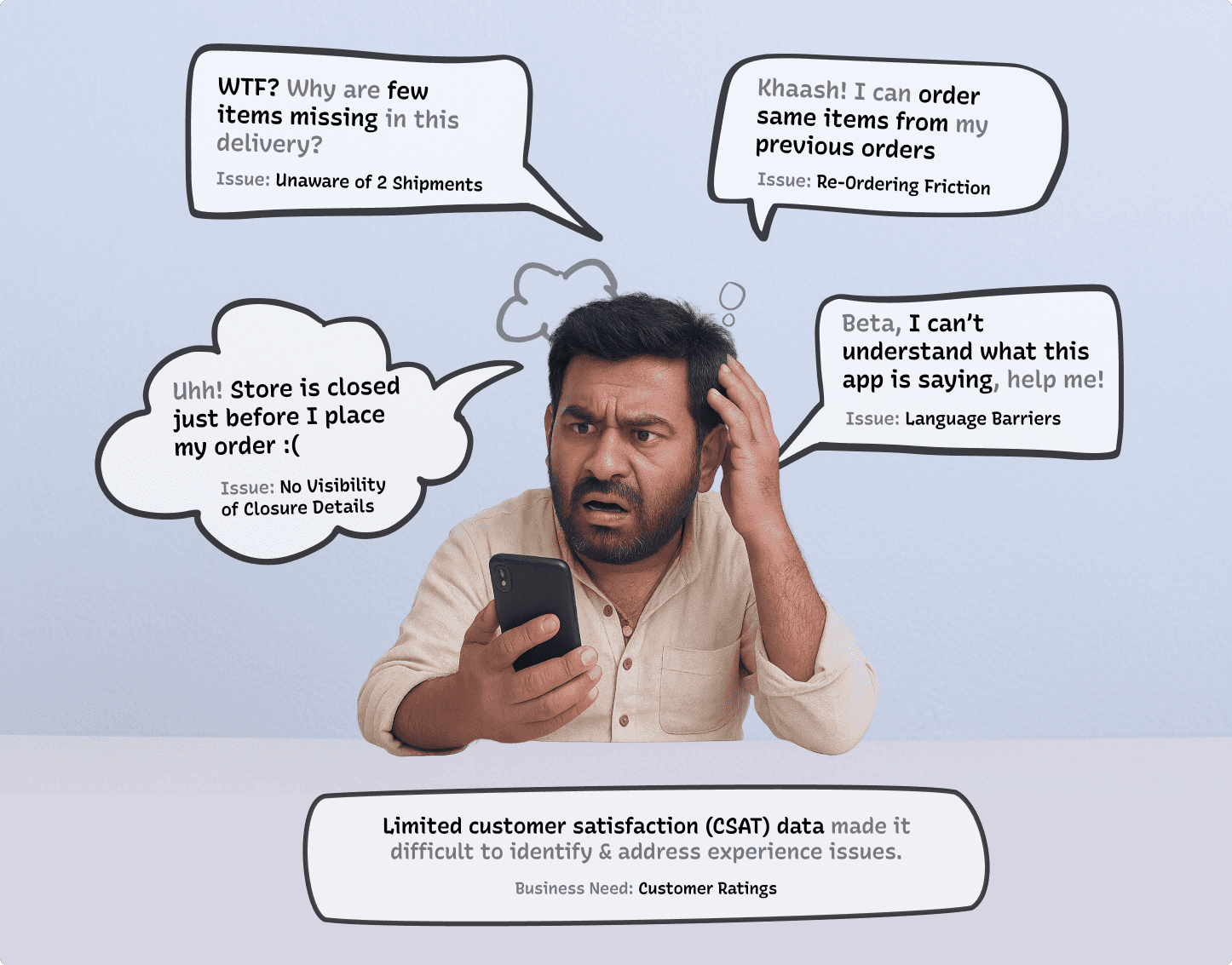
Target Users: Individuals from Tier 2-3 cities, including housewives and office professionals with varying age groups & digital literacy levels
Business Objectives
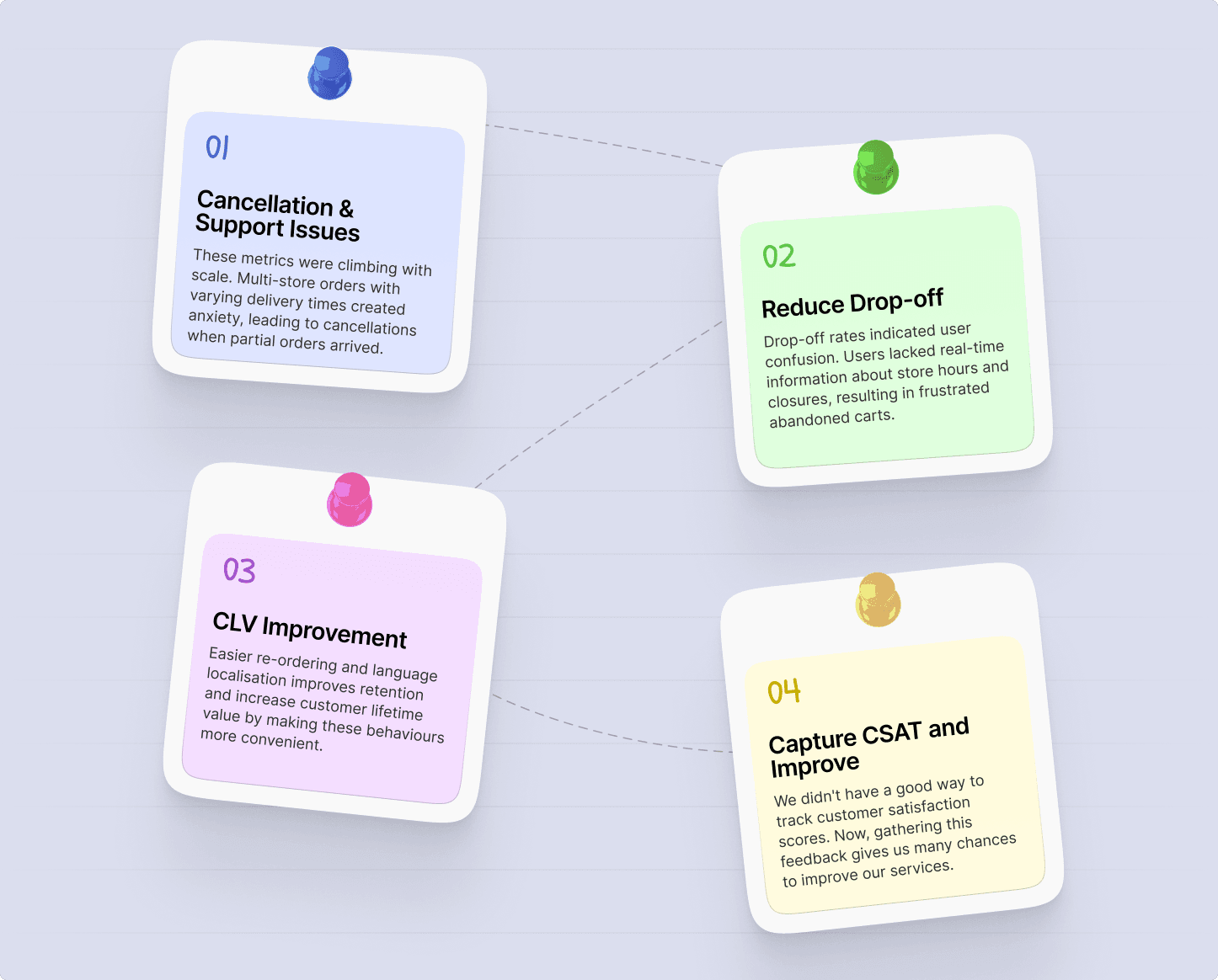
We used the following metrics to assess the product's impact on the business.
Strategic Design Approach
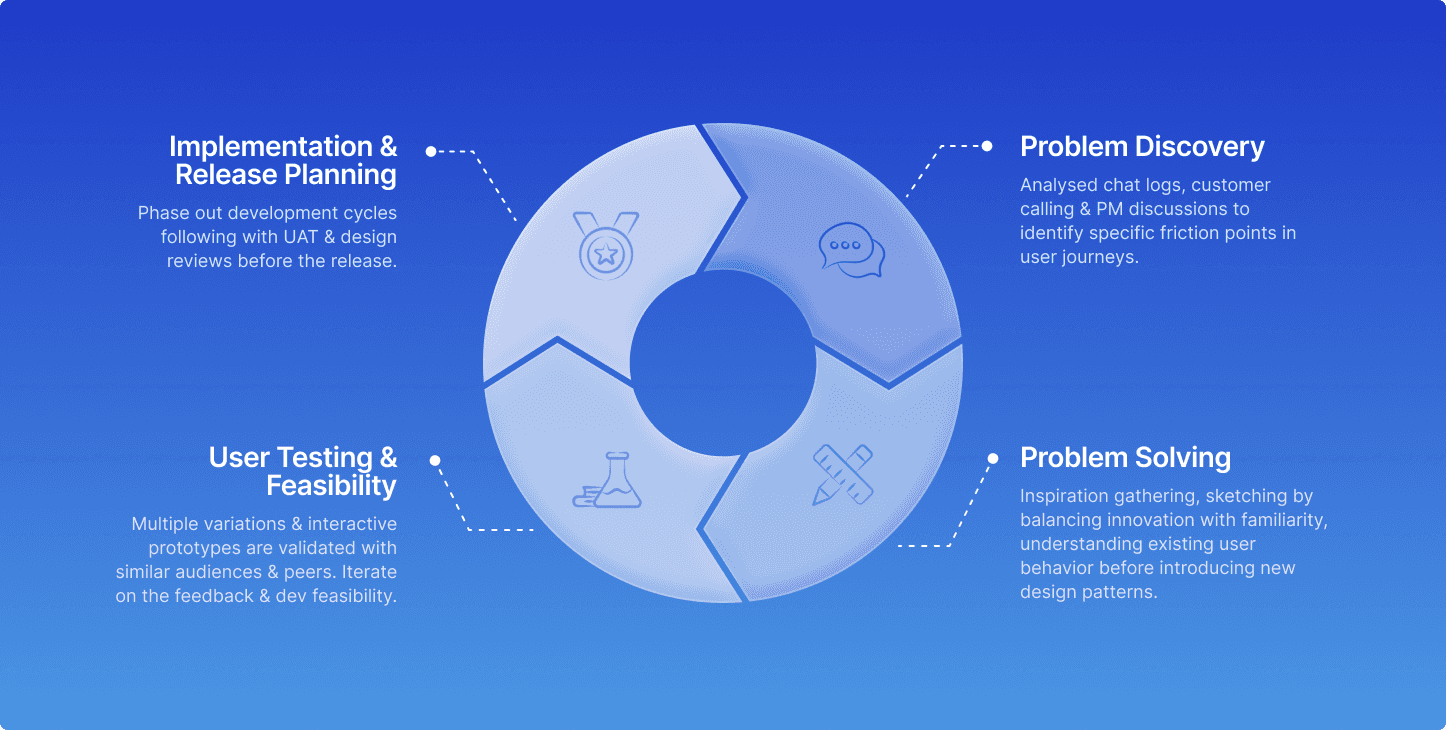
The design process is dynamic and adapts based on constraints. At a high level, the design process consists of the following stages.
UX Principles Applied
User Mental Models: Aligned designs with how users naturally think
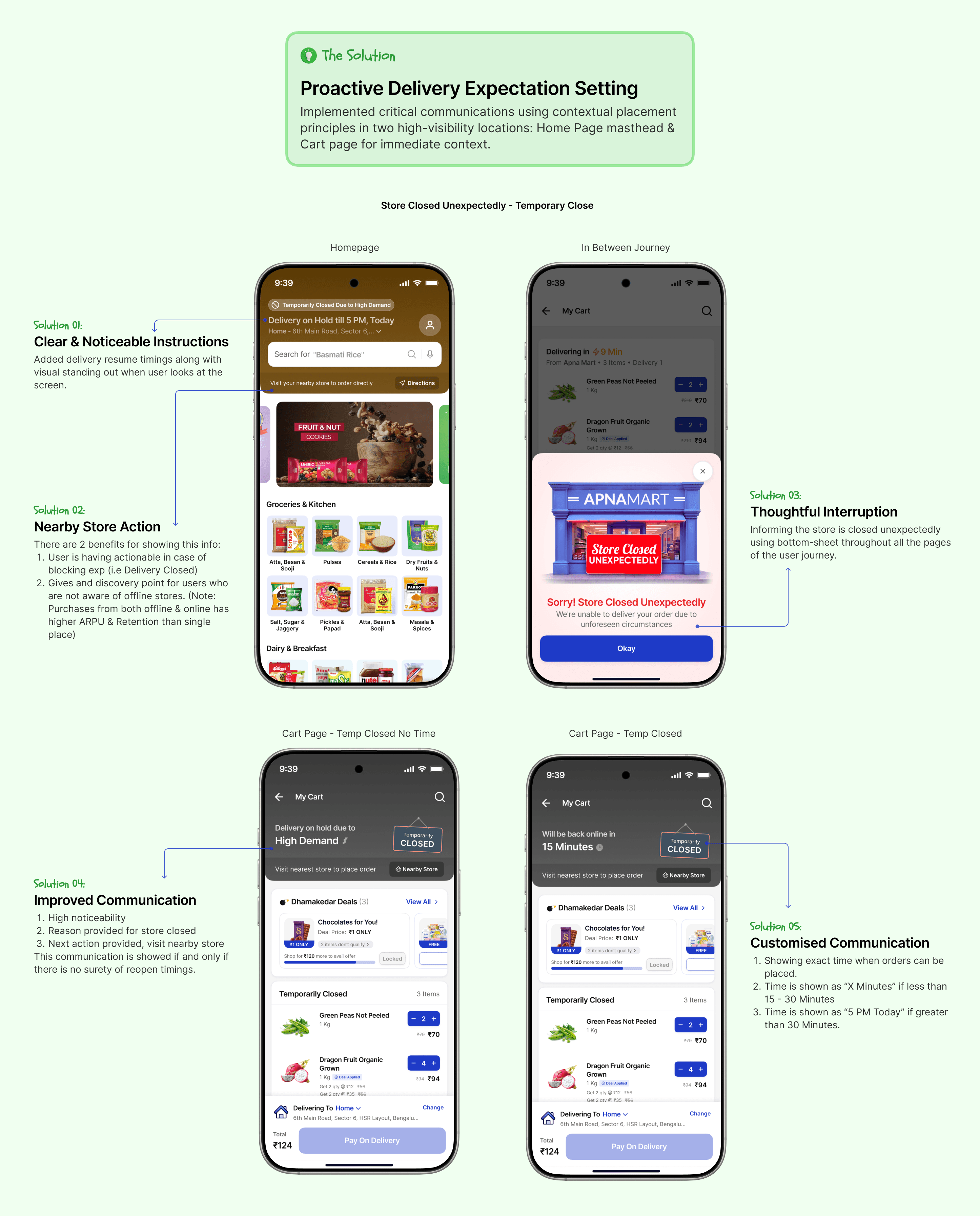
Contextual Placements: Positioned information precisely where needed
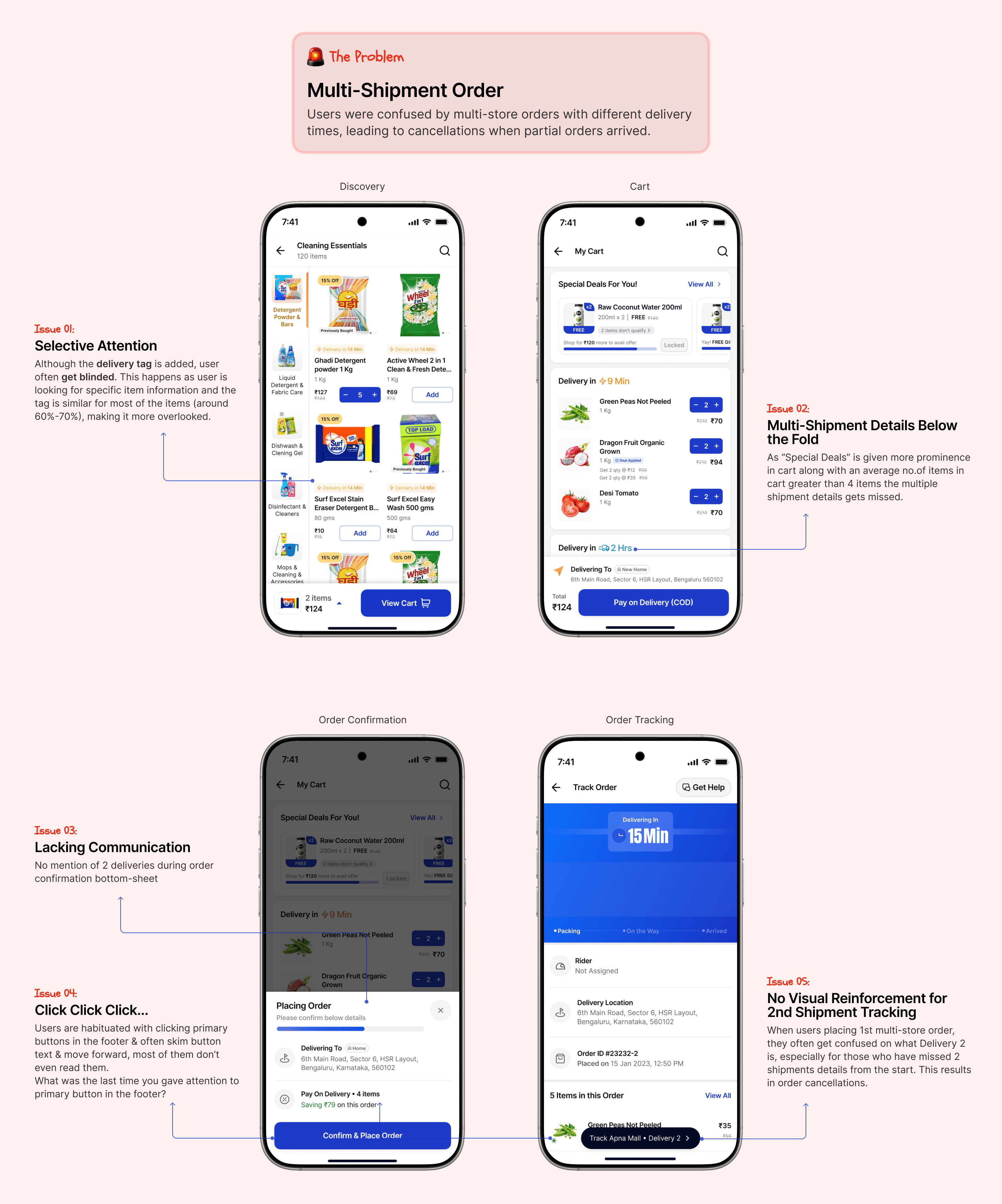
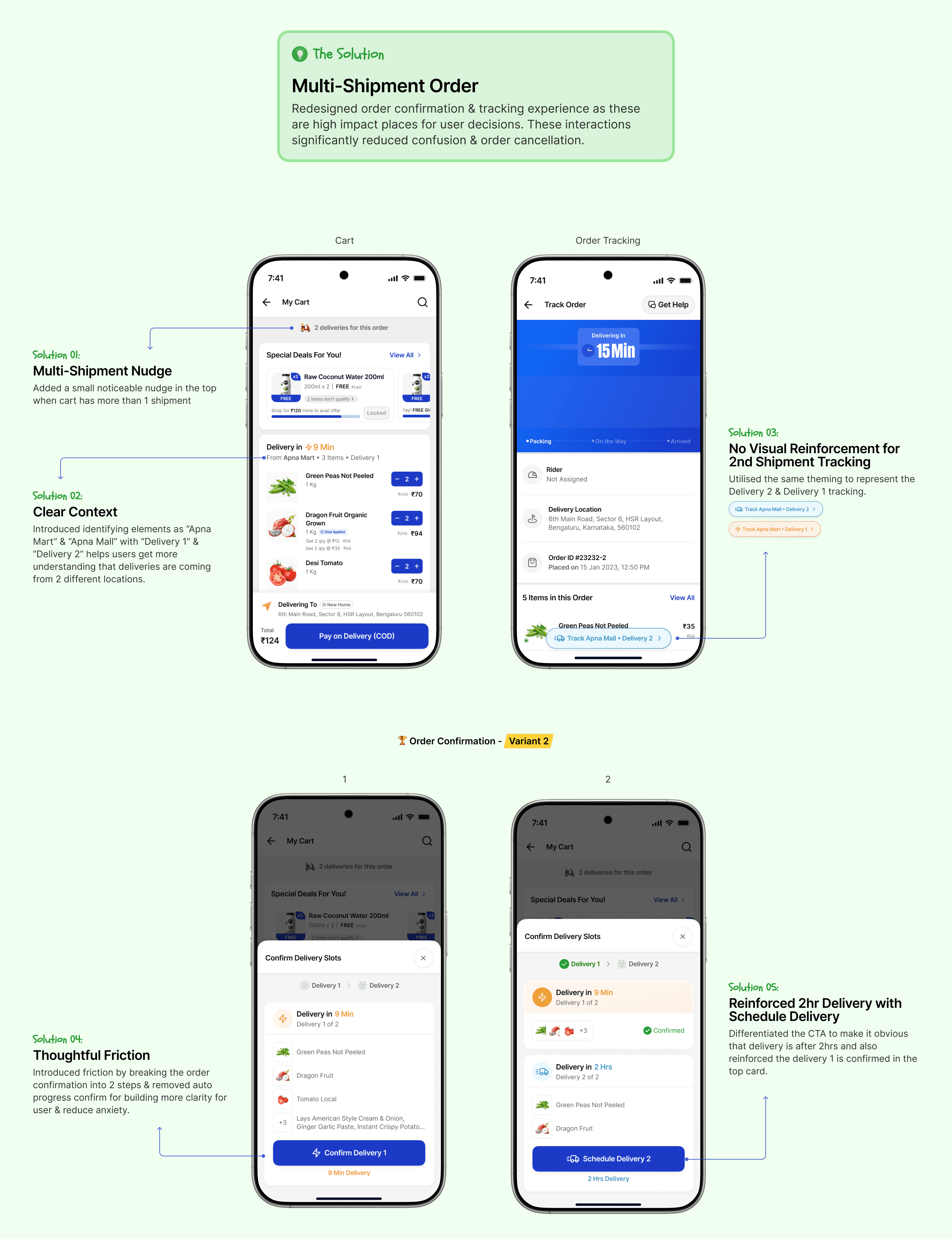
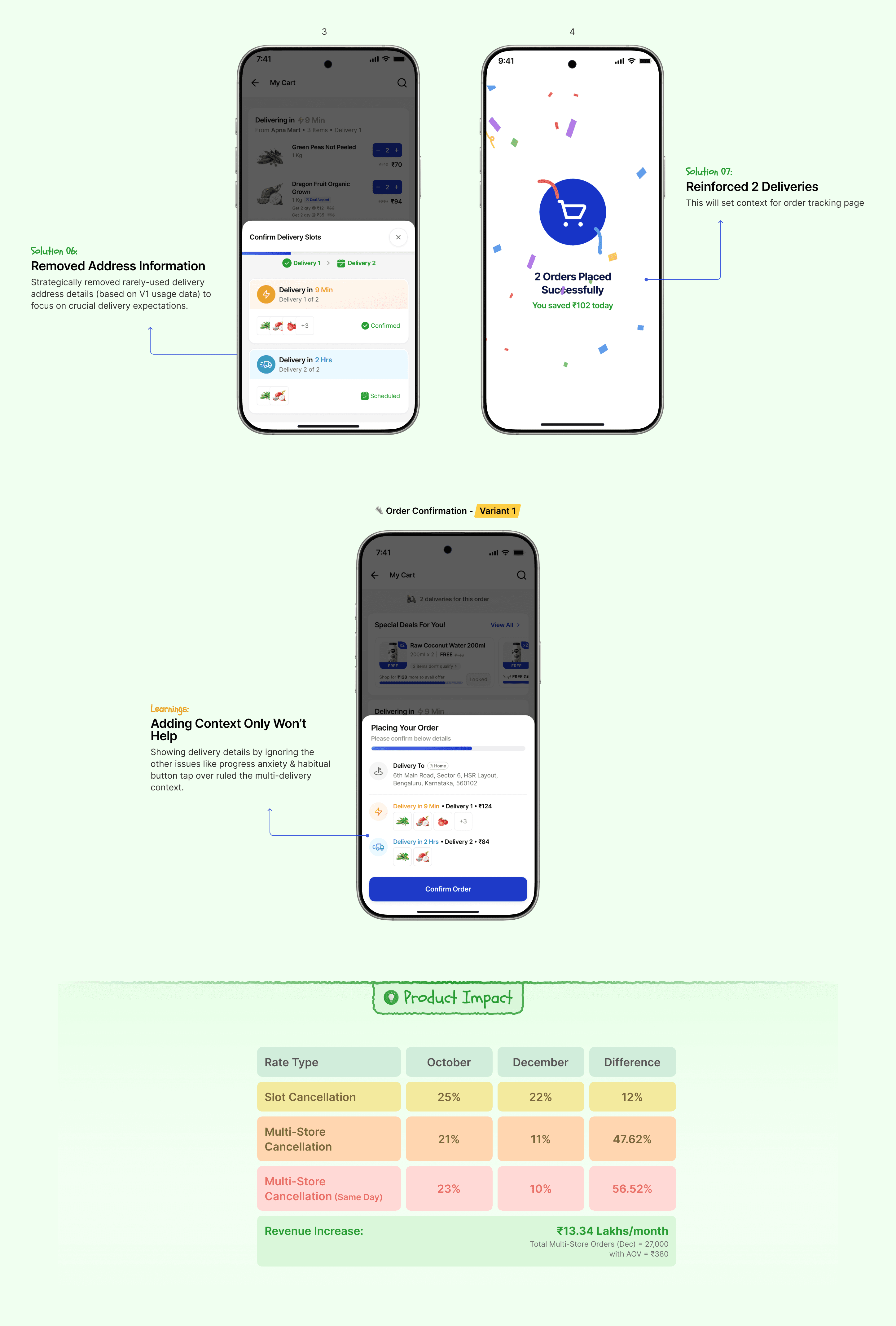
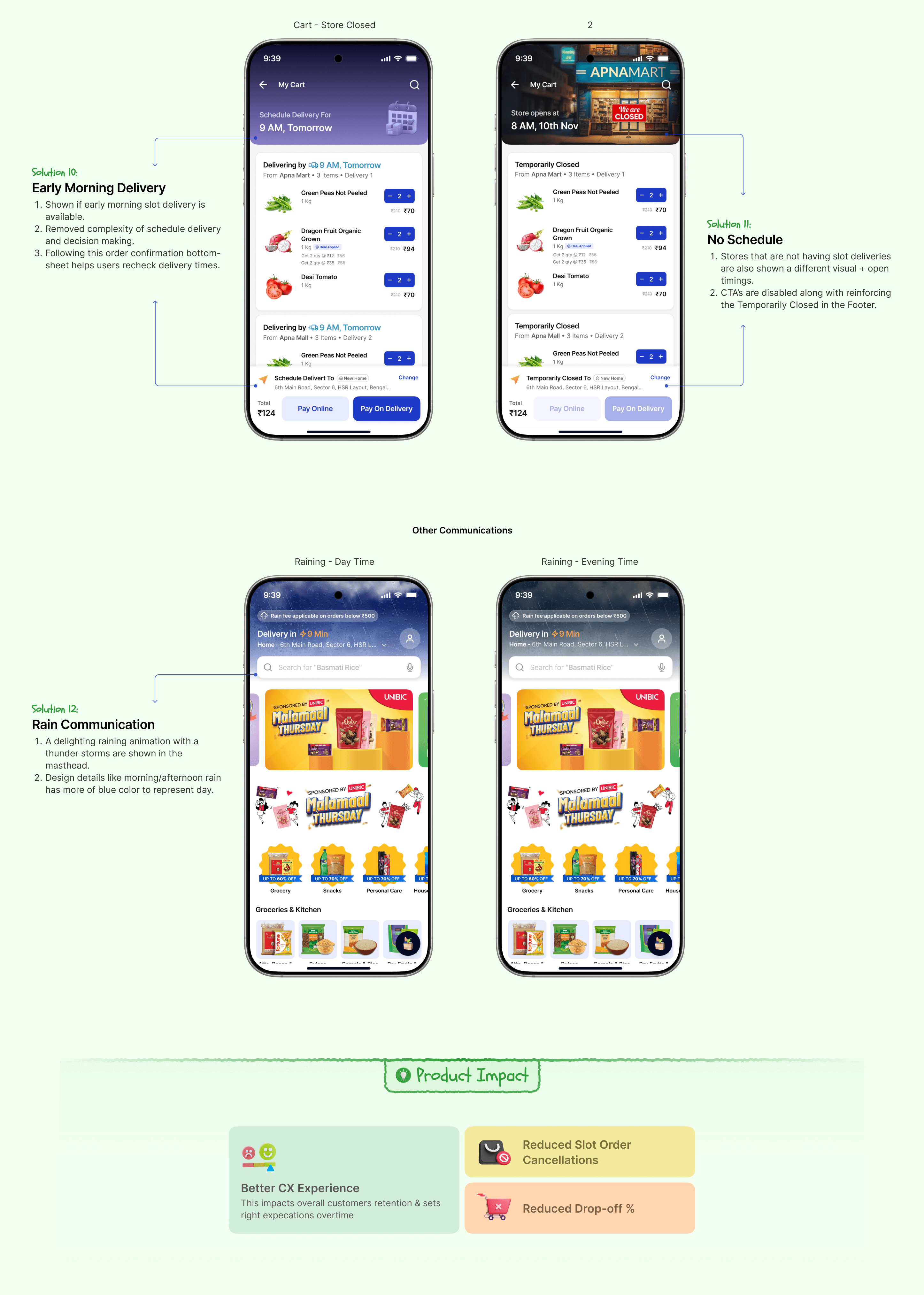
Thoughtful Friction: Strategically introduced friction (like Order Confirmation bottom sheets) for crucial clarity, directly reducing cancellations due to uncertainty
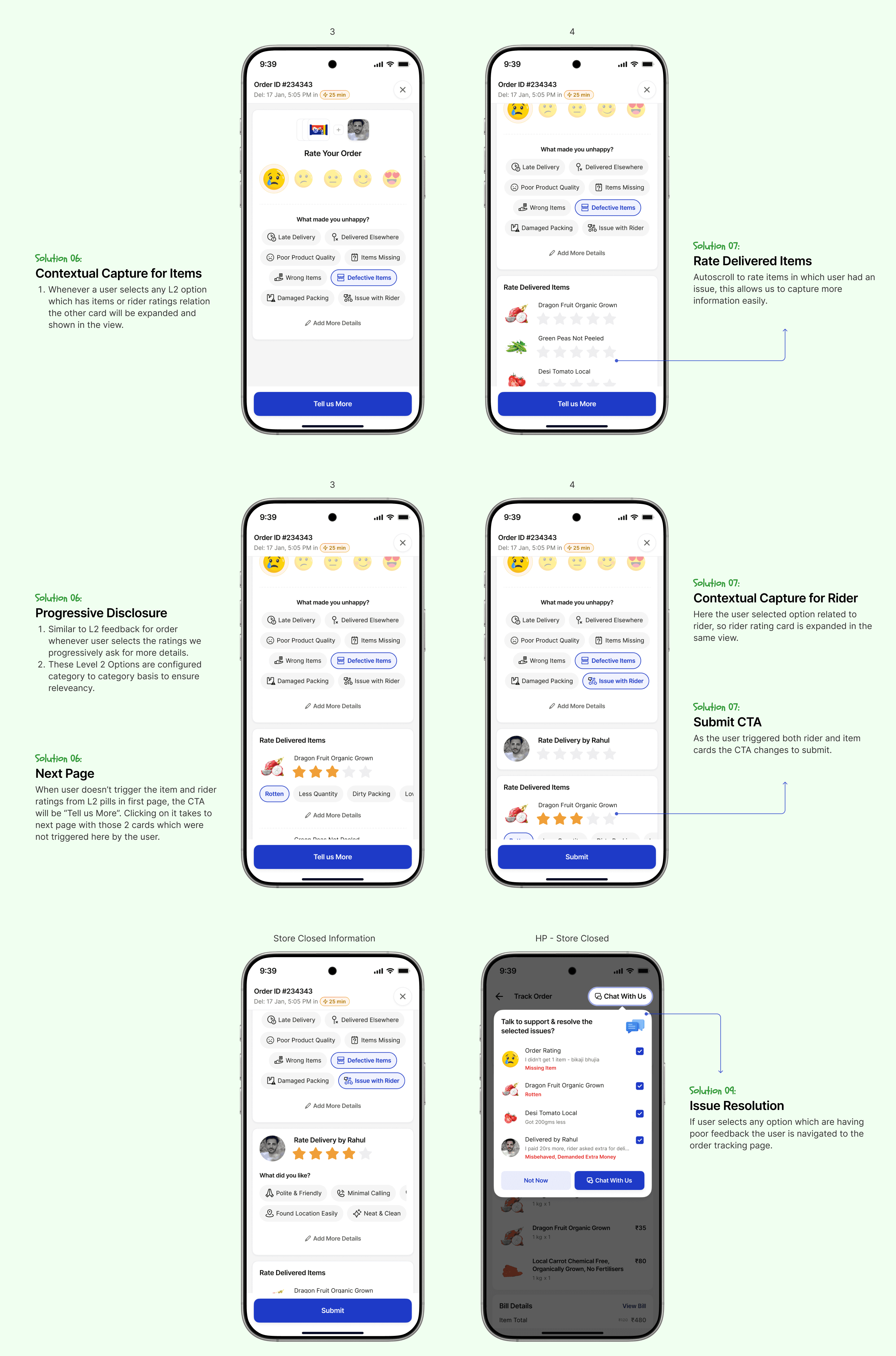
Cognitive Load Reduction: Used progressive disclosure and chunking to simplify complex multi-store details
Familiarity: Balanced innovation with familiar UI patterns for ease of adoption

Qualitative Outcomes
Beyond direct quantitative metrics, the collective effort yielded several positive operational shifts:
Increased User Confidence: Significant reduction in customer support complaints about multi-store delivery confusion
Operational Efficiency: Operations teams reported fewer manual interventions needed for order clarifications and cancellation handling
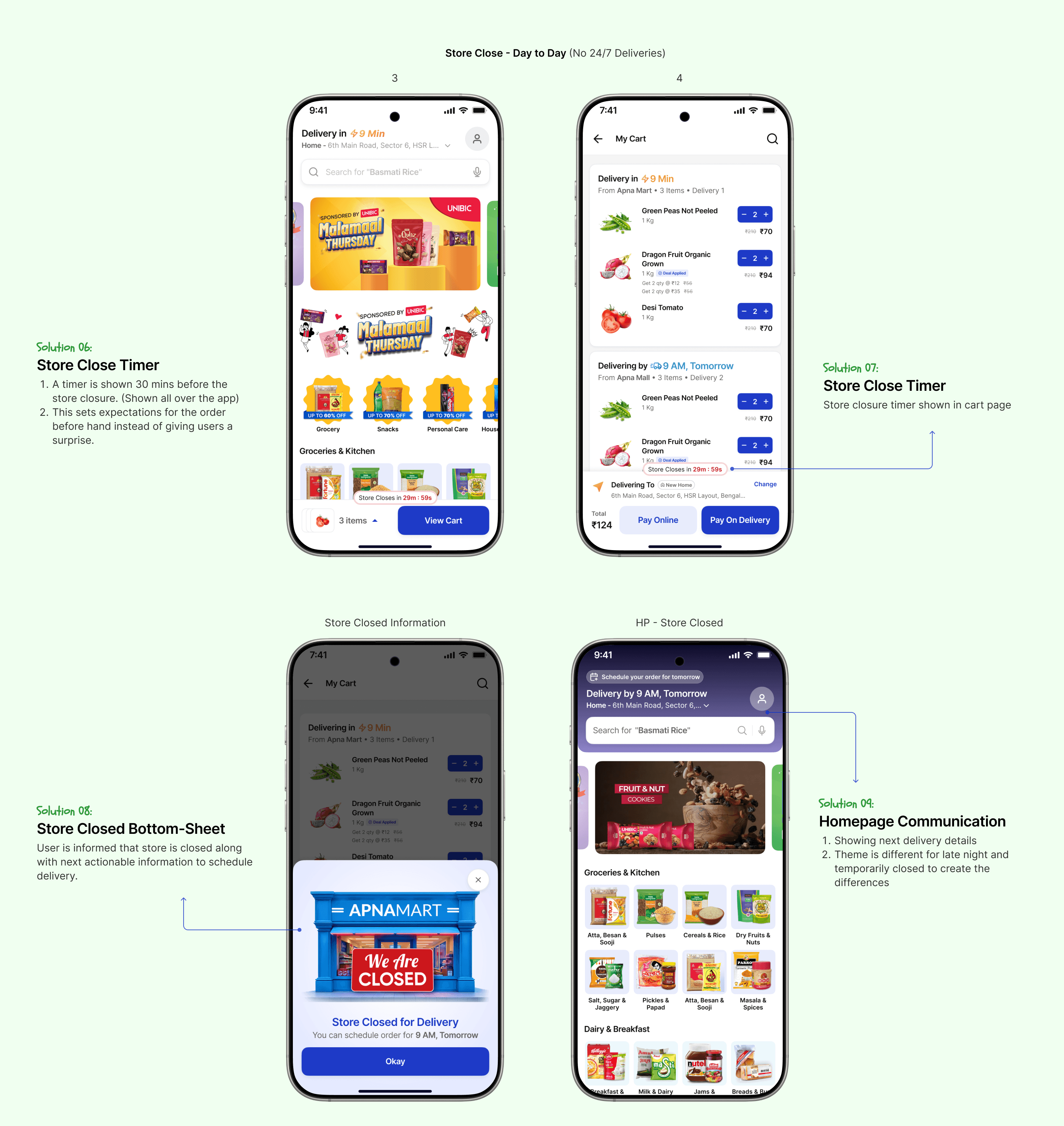
Proactive Decision-Making: Real-time information like store closure timers empowered users with critical context, reducing frustration and enabling informed purchase decisions